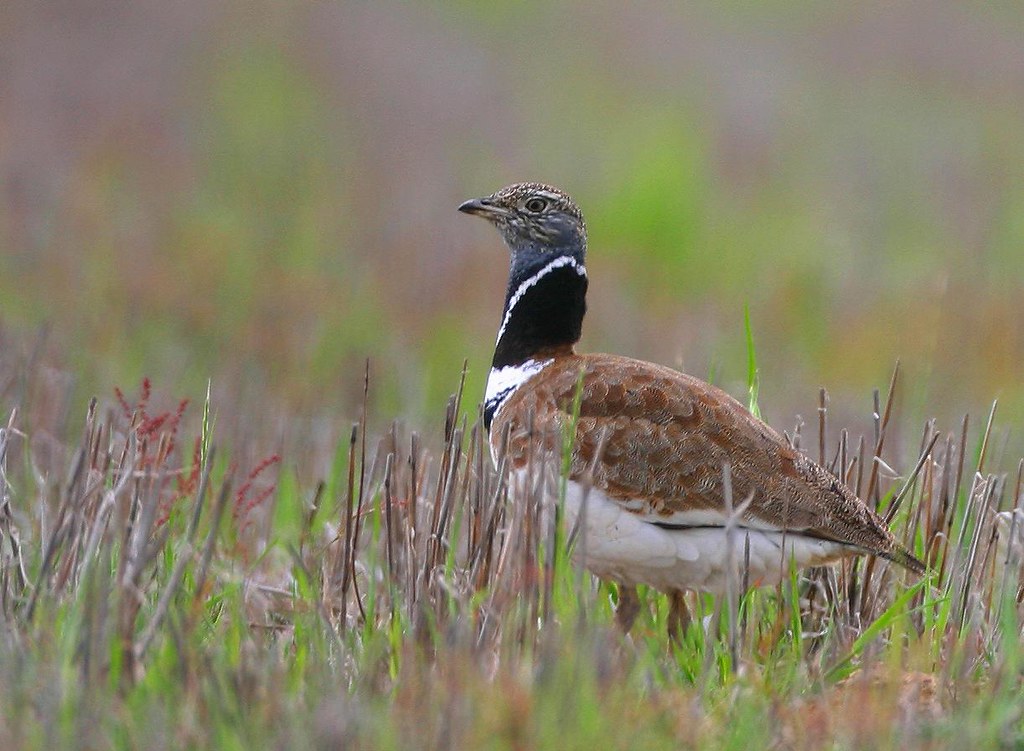
Little Bustard
Family Otididae
Length: 40-45 cm
Wingspan: 105-115cm
Weight: 700-950g
Much smaller than the Great Bustard, with very cryptic plumage. The male in the breeding season has a black neck with very visible white bands. When flying, the males produce a characteristic noise with their wings, called "hissing", which has given it its name. Important area for the breeding of the species, although with a recent decline in its breeding stock, which was larger in the past.
It is a particularly silent bird, although the male emits a characteristic "prreet" during the nuptial period, which is short and dry, and which he repeats constantly while performing a small jump.



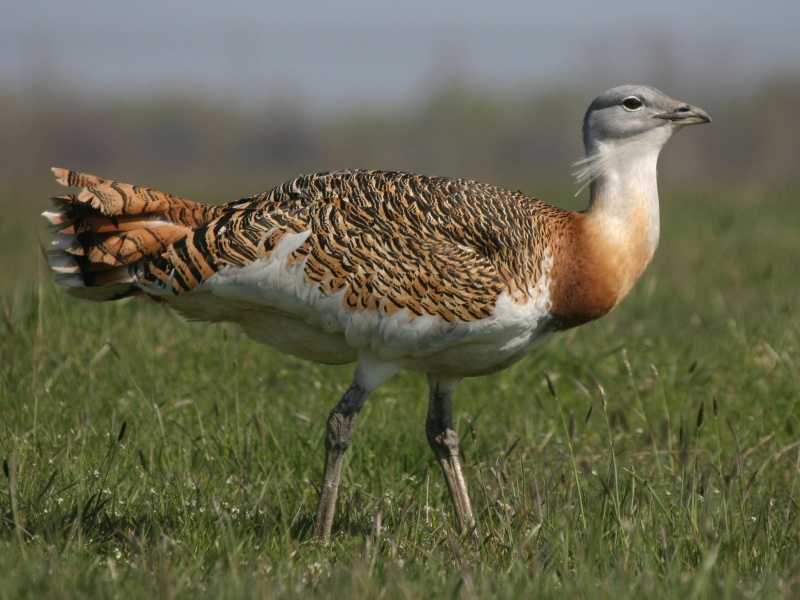
Great Bustard
Family Otididae
Length: 75 -105 cm
Wingspan: 190 - 260 cm
Weight: 3.8 -8.5kg
The heaviest bird in Europe, some large males reach up to 18 kg. Unmistakable for its large size. Accused of sexual dimorphism, the males being much larger than the females. During the nuptial period, adult males develop long, pointed, rigid and erectile feathers, which start from the lower jaw, which is why their owners are called "barbones".
Spain is home to half of the world's population.

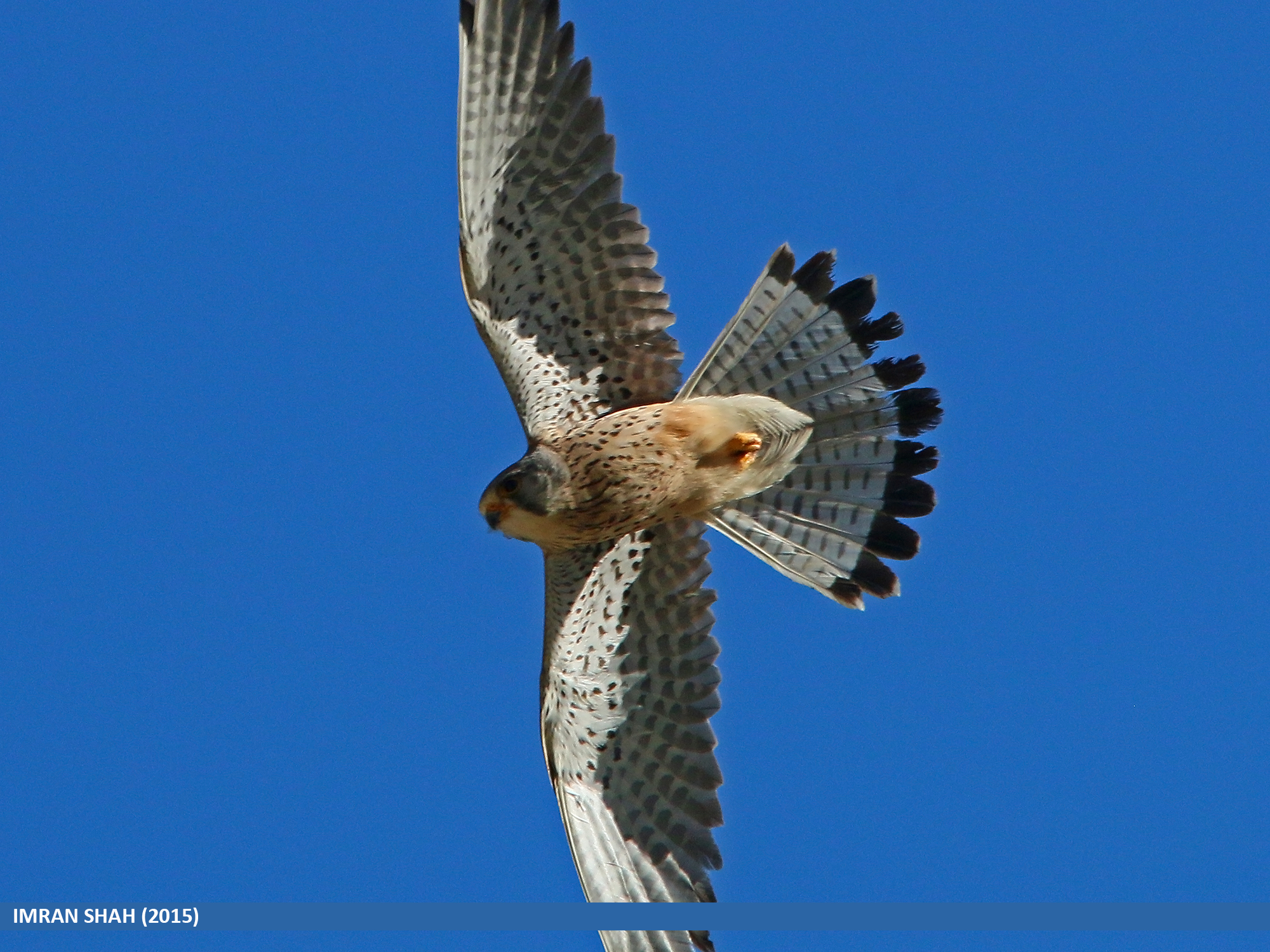
Common kestrel
Familia: Falconidae
Longitud: 32-35 cm
Envergadura: 71-80cm
Peso: 156-252g
Somewhat larger than the Lesser Kestrel, with a very different voice, black nails and a larger and more pronounced moustache.
It is one of the most common birds of prey in Europe.
It is present all year round in the area, which is home to a large breeding population at the provincial level. Wide range of habitat, from clear forest to crops. Breeding in trees and human constructions. Often emits loud, high-pitched screams, ki kii ki kii or triiii trrriii trrriii, especially when alarmed or in the vicinity of the nest.



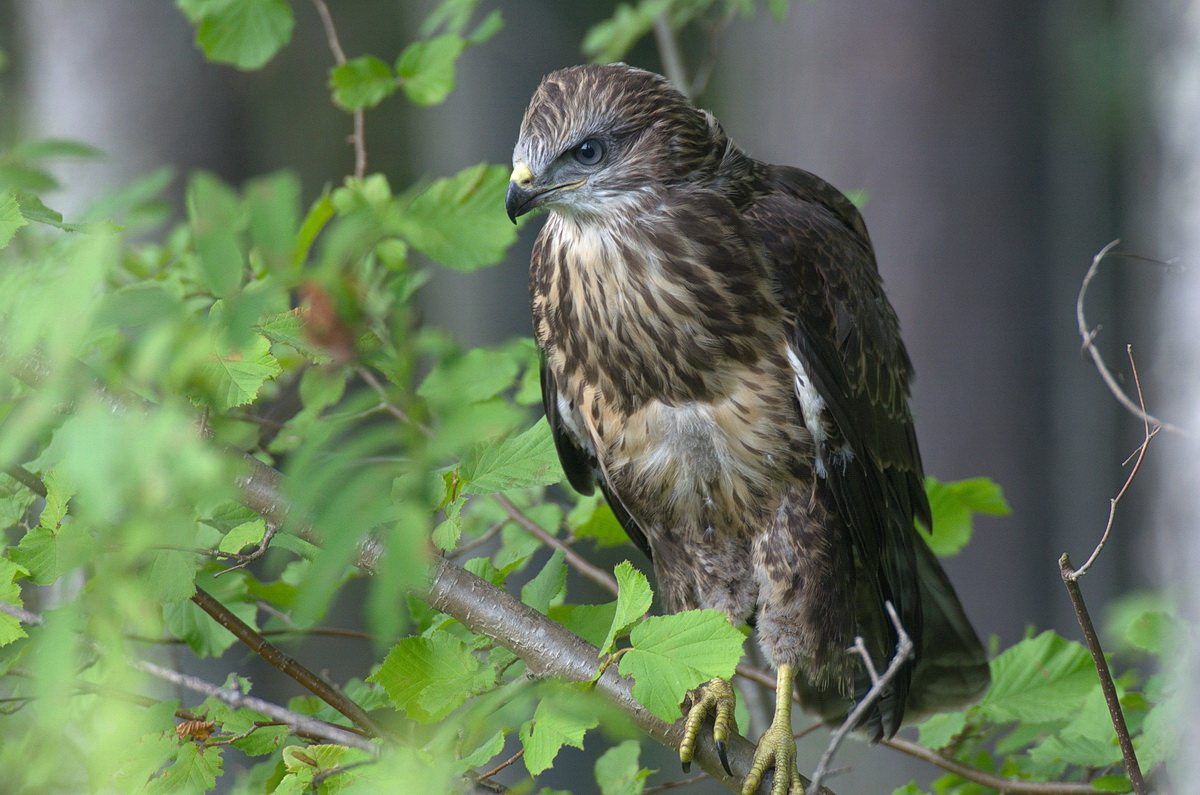
Common buzzard
Family Accipitridae
Length: 51-57 cm
Wingspan: 113-128cm
Weight: 0.5-1.3kg
One of the most common and widespread birds of prey. Often perched on poles beside roads. Very variable plumage, with several phases from almost white to dark brown. Very similar to the buzzard hawk, but with a larger head and no dark bands on the underside of the tail. Much more numerous and extended during the breeding period, when the area concentrates a significant population, with specimens from Europe and other Spanish regions.
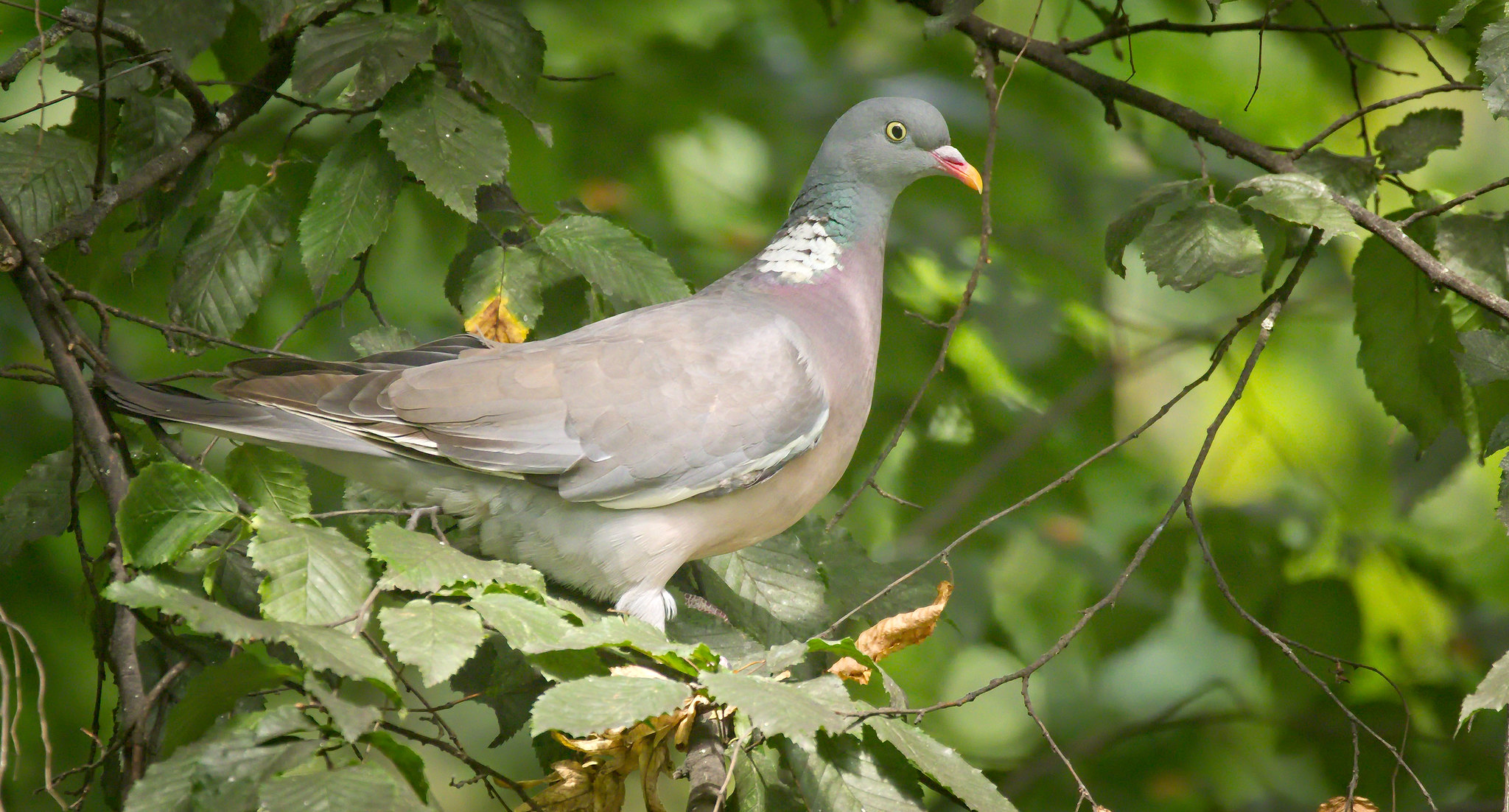
Common woodpigeon
Family Columbidae
Length: 40-42cm
Wingspan: 75-80cm
Weight: 284-614g
Larger than the Rock Dove, with striking white spots on its neck and wings. Very numerous in migratory passage, especially in autumn. Important recent increase in the nesting population in the area, having colonised the parks and urban gardens.
Young without neck marks.

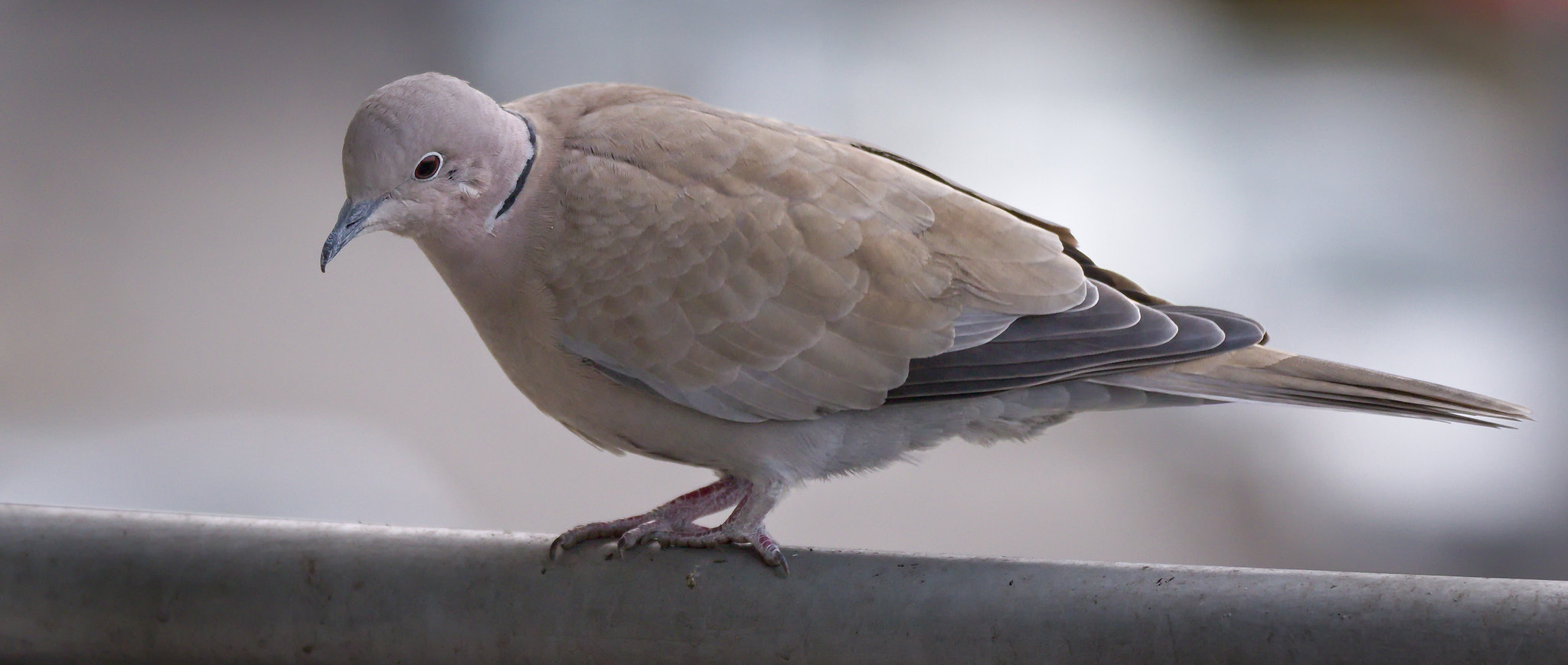
Collared dove
Family Columbidae
Length: 31-33cm
Wingspan: 47-55cm
Weight: 170-240g
Originating in Asia and the Middle East, it has spread dramatically throughout Europe. Plumage much more uniform and duller than the common turtledove, with no black spots on the upper part of the tail. Recent coloniser in the area since the end of the 20th century. Very numerous at present.
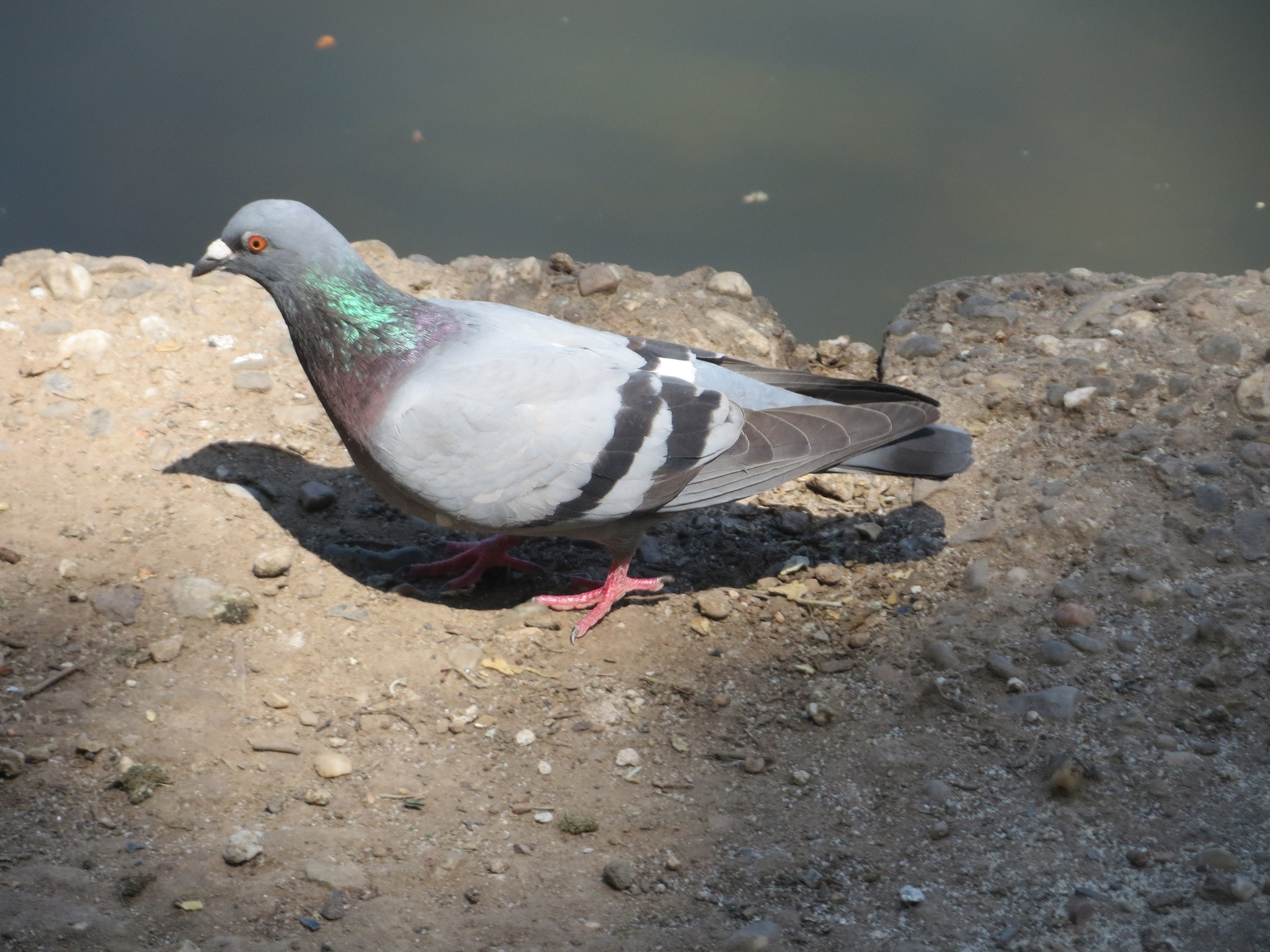
Rock dove
Family Columbidae
Length: 31- 34cm
Wingspan: 63-70cm
Weight: 230-370g
Smaller than the woodpigeon.
Plumage very variable due to the Hybridisations with domestic forms.
Wings always white for underneath. Very abundant in all the villages in the area. The abandonment of the traditional clay dovecotes is putting an end to one of the most characteristic prints of the region.
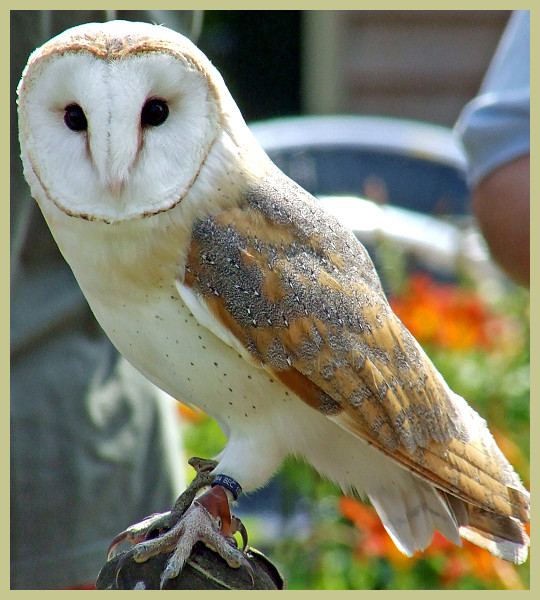
Common owl
Family Tytonidae
Length: 33-35cm
Wingspan: 85-93cm
Weight: 240-350g
The only representative of the family Tytonidae on European territory. It is an effective predator of rodents and small birds. Its white plumage makes it easy to distinguish from other species of nocturnal birds of prey in the area. It is a common resident and it can be found quite frequently in buildings and lofts in almost all the municipalities of the region. In winter, European specimens arrive.
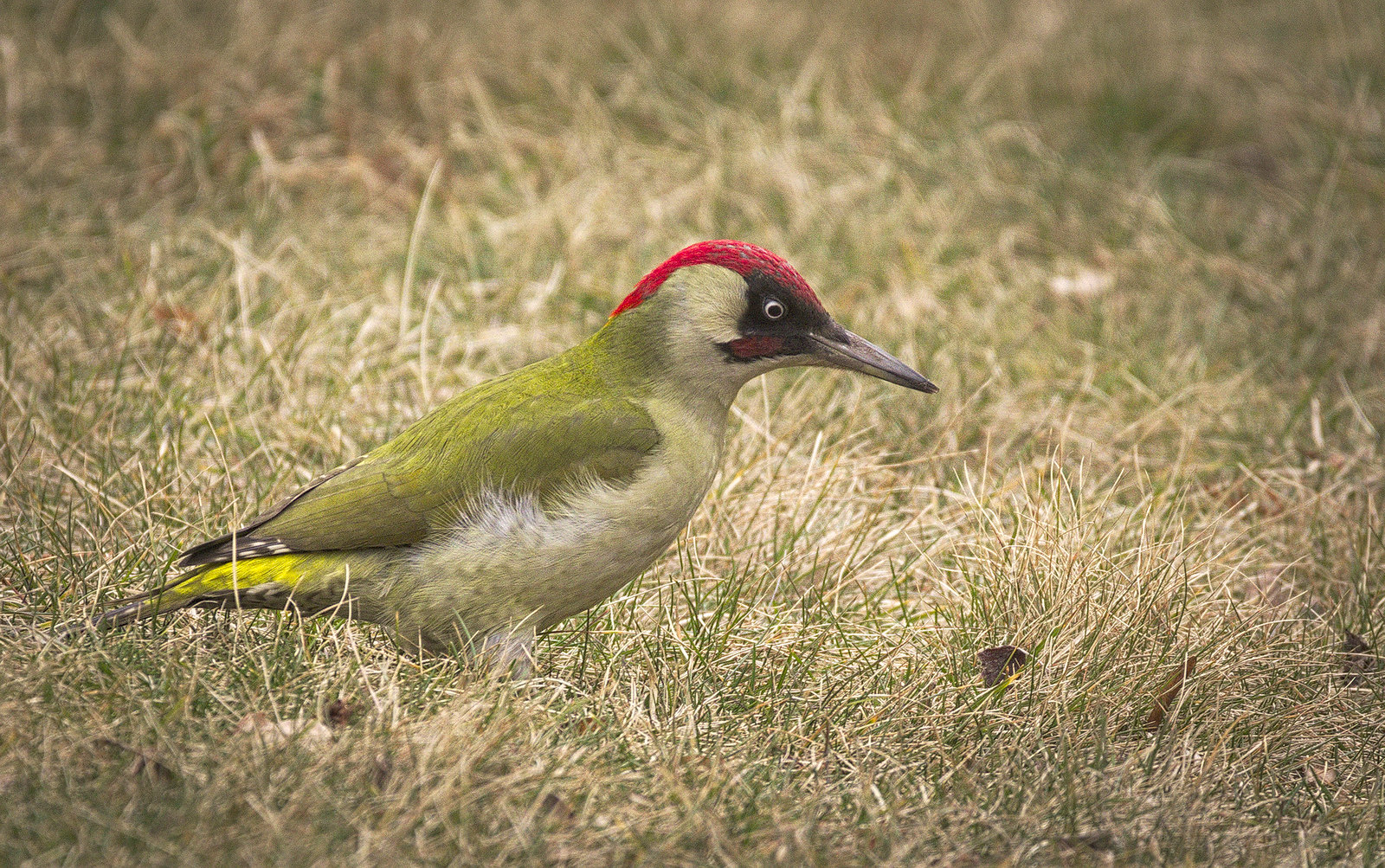
European green Woodpecker
Family Picidae
Length: 31-33cm
Wingspan: 40-42cm
Weight: 150-220g
The most numerous and widespread woodpecker in the area. The female can be distinguished from the male by her black moustache. It has a long, sticky tongue that it uses to search for eggs, larvae and insects.
The song of this species is unmistakable. It is a kind of whinny, very loud, which the bird performs in a rapid sequence, lasting about two or three seconds.
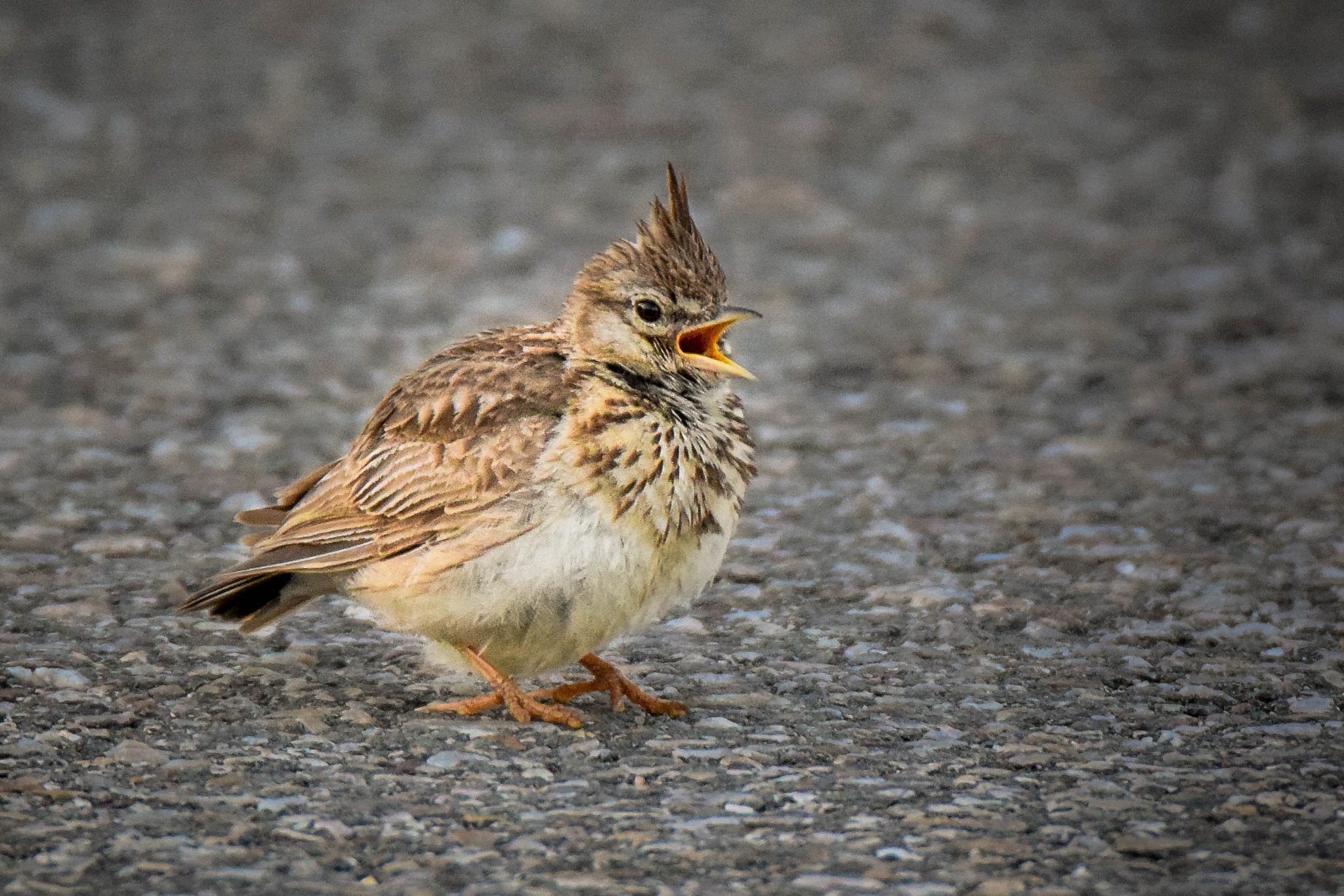
Crested lark
Family Alaudidae
Length: 17cm
Wingspan: 29-38cm
Weight: 37-55g
Somewhat larger than the Thekla lark (rare in the area, where it only inhabits areas with natural vegetation), with a longer crest, more diffuse mottling on the chest and sandy-coloured plumage. It is very widespread in the region in all types of human settlements o inhabited areas, although it is never numerous.
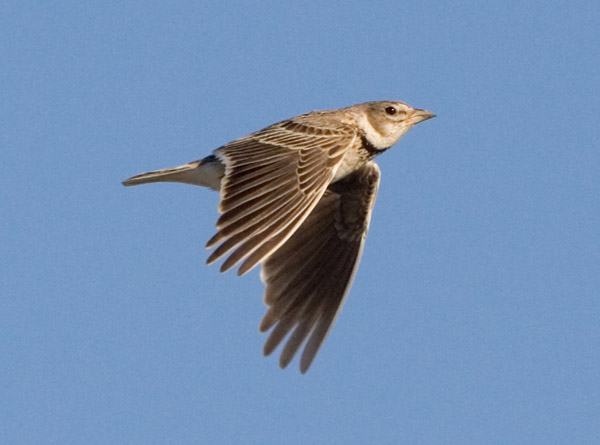
Calandra lark
Family Alaudidae
Length: 18-19cm
Wingspan: 34-42cm
Weight: 44-73g
One of the most numerous and characteristic species of the area, which lives all year round.
The Iberian Peninsula, together with Russia, is the main population center for this species, which is larger than the skylark, with black wings underneath. Important nesting population in the cereal fields of the region, being of a very favourable area for the species. Large wintering flocks with hundreds of birds.
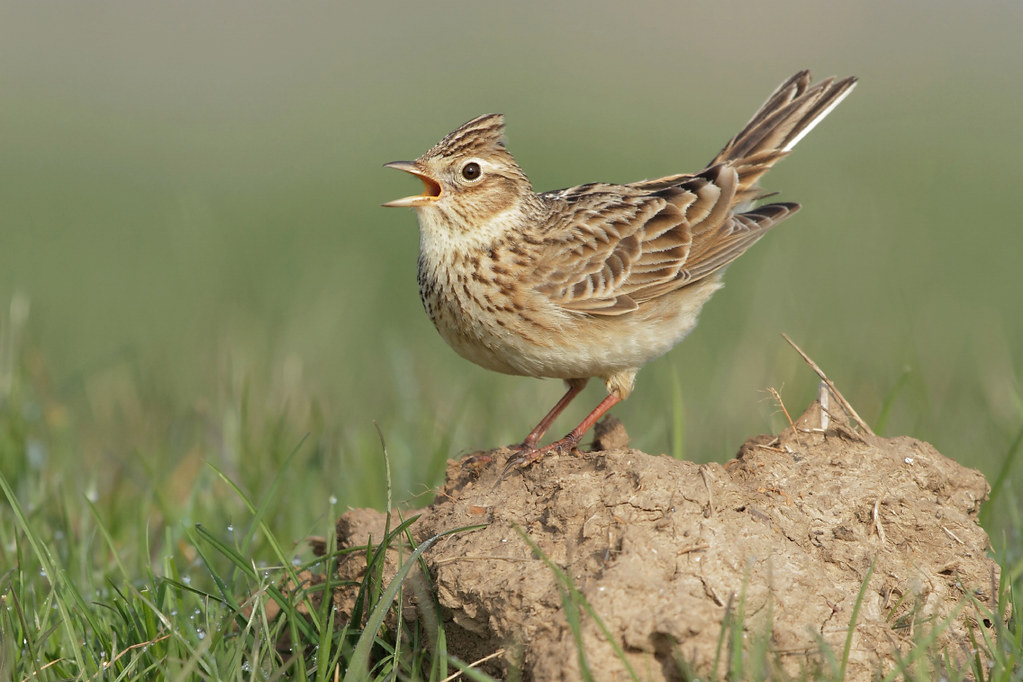
Eurasian skylark
Family Alaudidae
Length: 18-19cm
Wingspan: 30-36cm
Weight: 26-50g
Very abundant and widespread in the area. Important breeding area, but even more numerous in winter, with a notable arrival of European birds. Outside the period the breeding stock is grouped into large flocks, often consisting of hundreds of individuals. Strong and melodious singing.
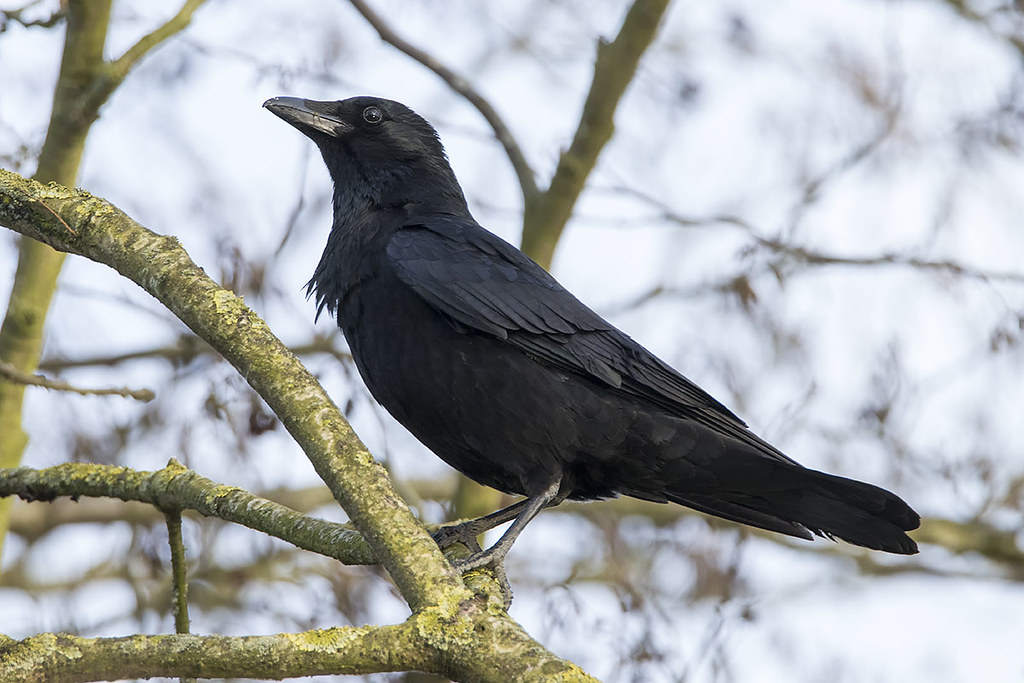
Carrion crow
Family Corvidae
Length: 45-47cm
Wingspan: 93-104cm
Weight: 370-650g
With an unjustified bad reputation, accused of devouring crops their great role as agricultural pest controllers is forgotten.
Somewhat larger than the jackdaw, with uniform dark plumage and a beak longer. Usually observed in pairs or small family groups. Forms important roosts outside the reproductive period.
The most common corvid in the area, which nests in trees isolated, thickets or island forests and feeds on open flat areas (crops, waste, stubble, wasteland, meadows...).
Its most characteristic sound is a hard, metallic arr or a low kraar.
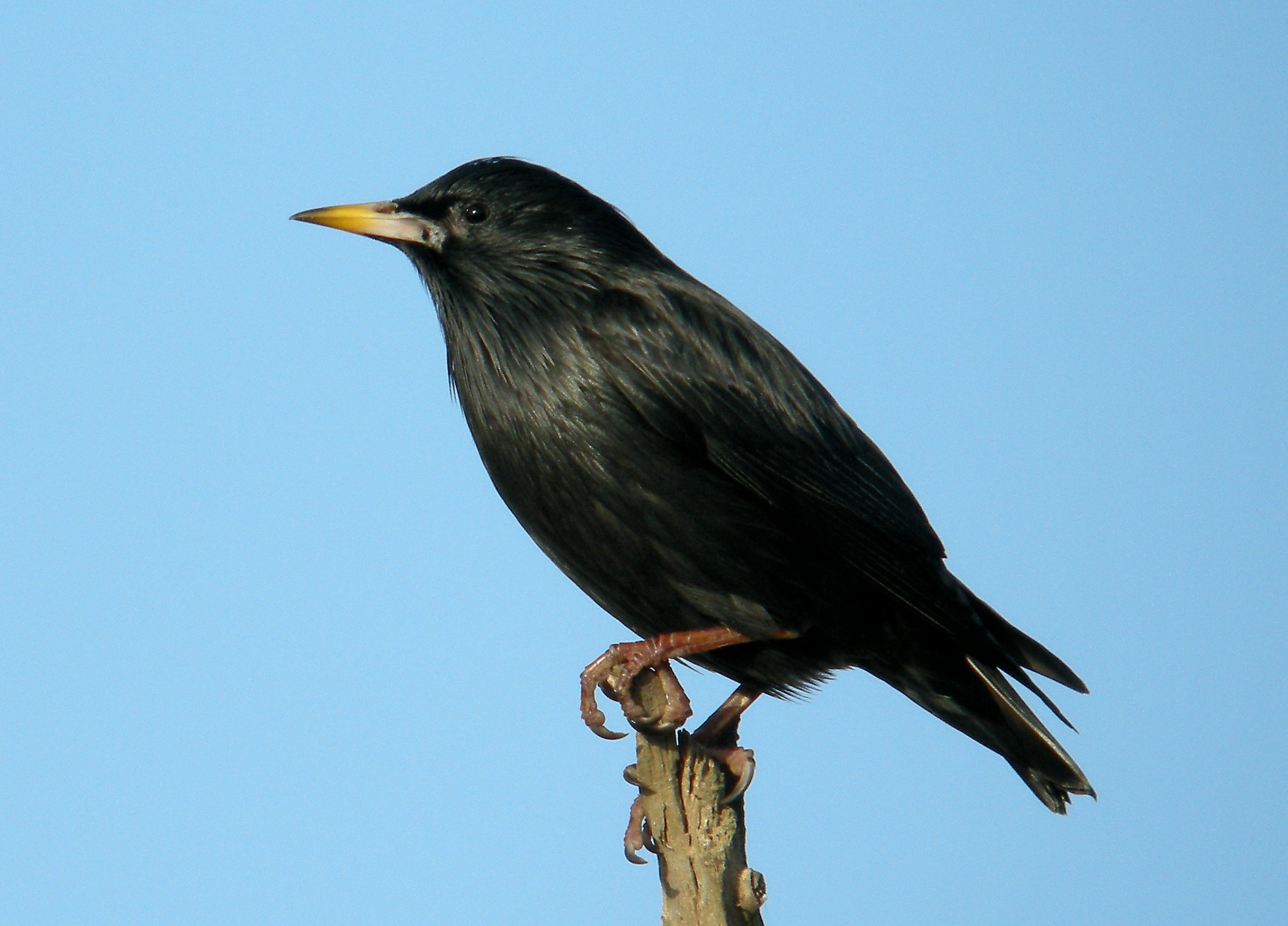
Spotless starling
Family Sturnidae
Length: 21-23cm
Wingspan: 38-42cm
Weight: 86-96g
Similar to the starling, but with uniform plumage with bluish highlights. Present all year round. Very numerous as a nesting bird in urban centres, where it occupies holes in buildings, constructions or large trees. Outside the reproductive period, it forms important roosts in trees in squares, gardens or walks.
With a wide vocal repertoire that allows you to imitate the singing of many birds.

Common linnet
Family Fringillidae
Length: 13-14cm
Wingspan: 21-25cm
Weight: 15-22g
The colour of the front, chest, head and back are distinctive. It is of the most numerous finches in the region, where they inhabit all kinds of environments, from forest edges or bush areas to the cultivated cereal steppe. In winter it forms large flocks, which can number hundreds of specimens, often mixed with other species. It is easy to detect by its attraction in flight or by the striking carmine colour of the males in spring.
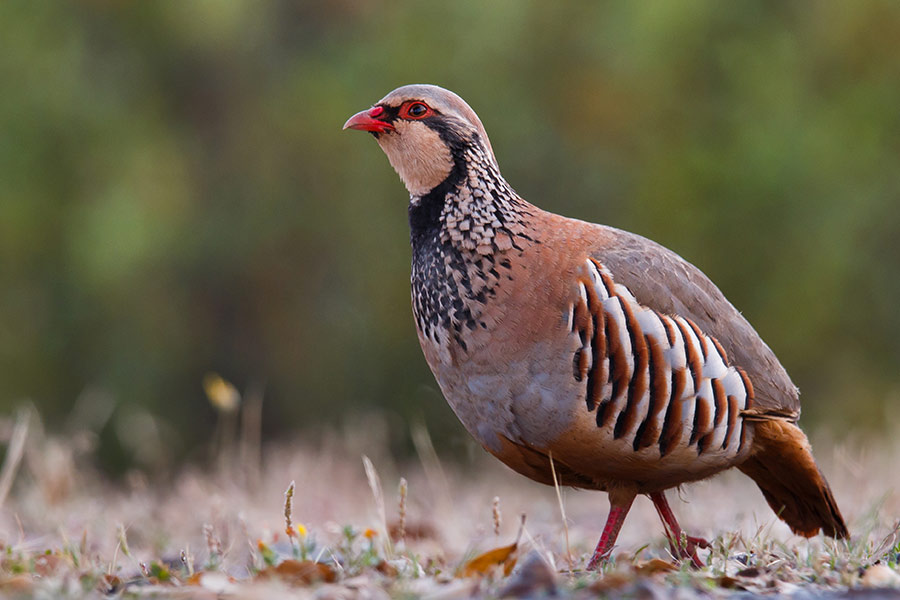
Red-legged partridge
Family Phasianidae
Length: 32-34 cm
Wingspan: 47-50cm
Weight: 400-550g
Unmistakable. The male is somewhat older, with spurred legs. Significant decrease in its numbers in recent times, in an area where it has always been numerous, due to a series of unfavourable factors (increase in pesticides and herbicides, land consolidation, destruction of the habitat, hunting, mechanisation of agricultural tasks, etc.)

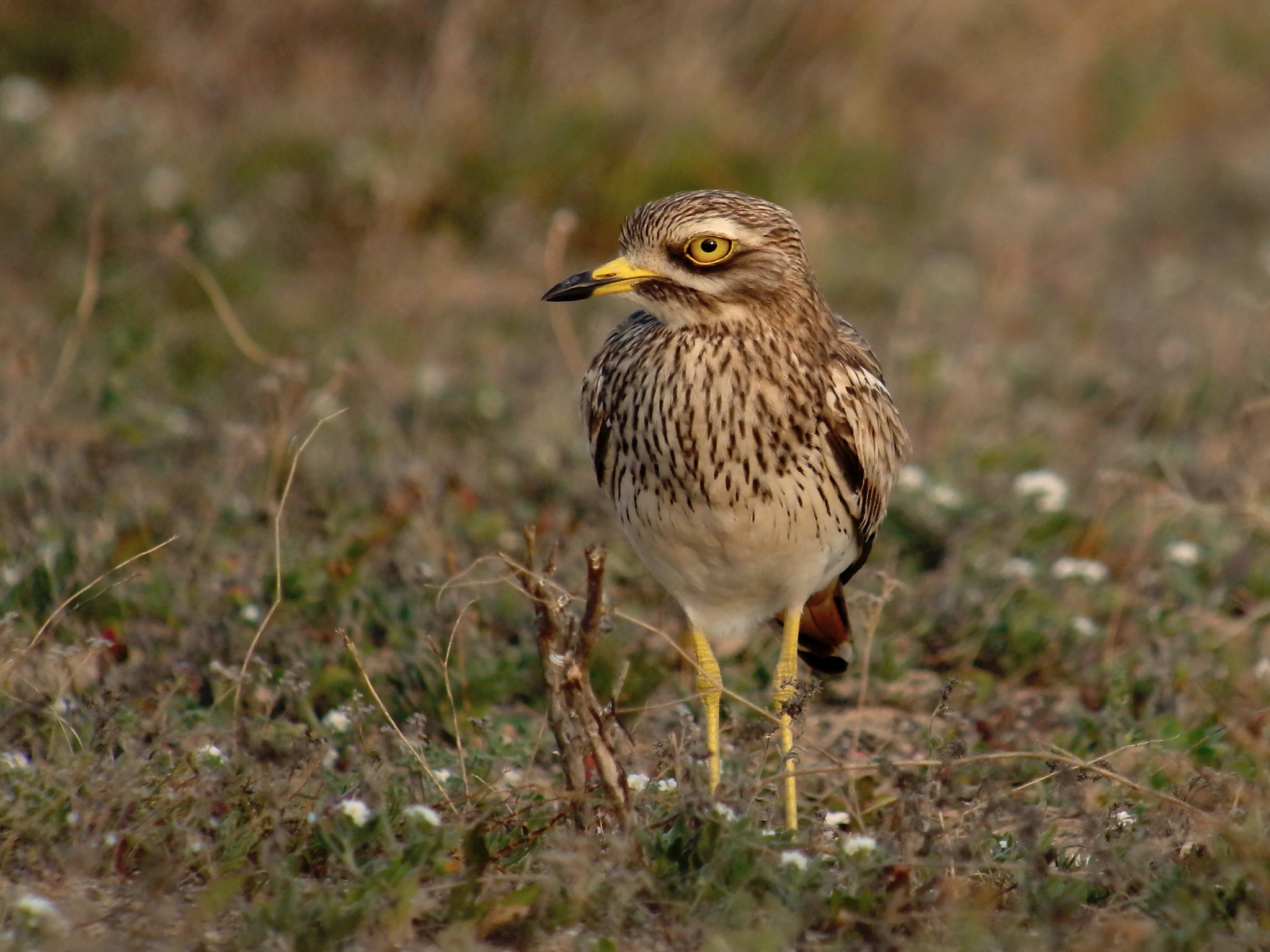
Stone-curlew
Family Burhinidae
Length: 40-44cm
Wingspan: 77-85cm
Weight: 430-500g
Unmistakable. The cereal steppes are a good breeding ground for the species, which prefers wastelands, wastelands and uncultivated areas. Also in pastures. In autumn-winter groups into factions.
It is not easy to observe because of its discreet colours and its elusive, nocturnal habits.
During spring and summer, it has a characteristic attraction, an unmistakable cur-li-liii that can be heard at twilight and at night.

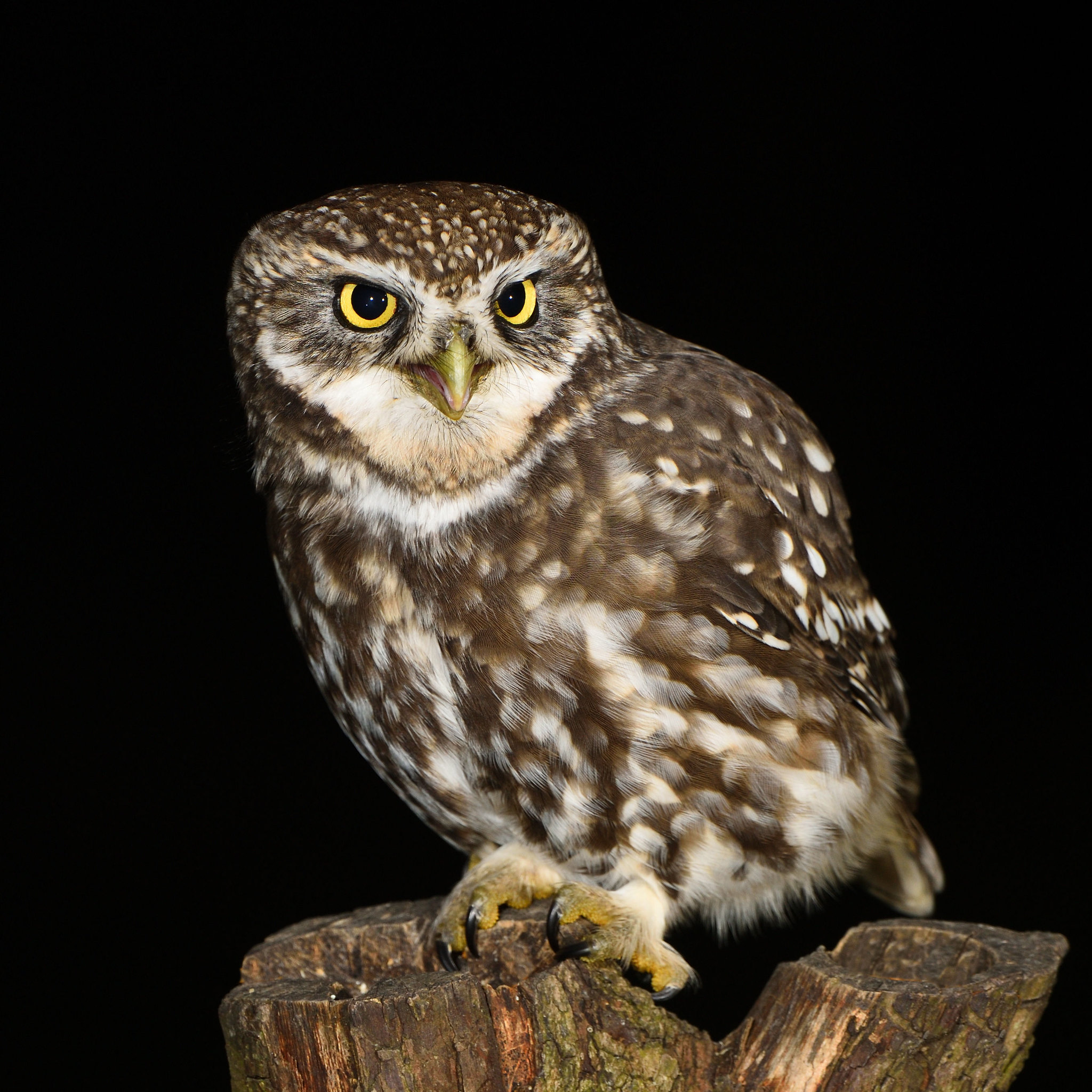
Little owl
Family Strigidae
Length: 21-23cm
Wingspan: 54-58cm
Weight: 140-220 g
Easy to distinguish by its rounded head with large yellow eyes and mottled grey plumage. The most numerous nocturnal bird of prey in the region, widely distributed in all types of urban or agricultural buildings, including traditional cairns and dovecotes.
It is partially active during the day, which makes it easier to observe.
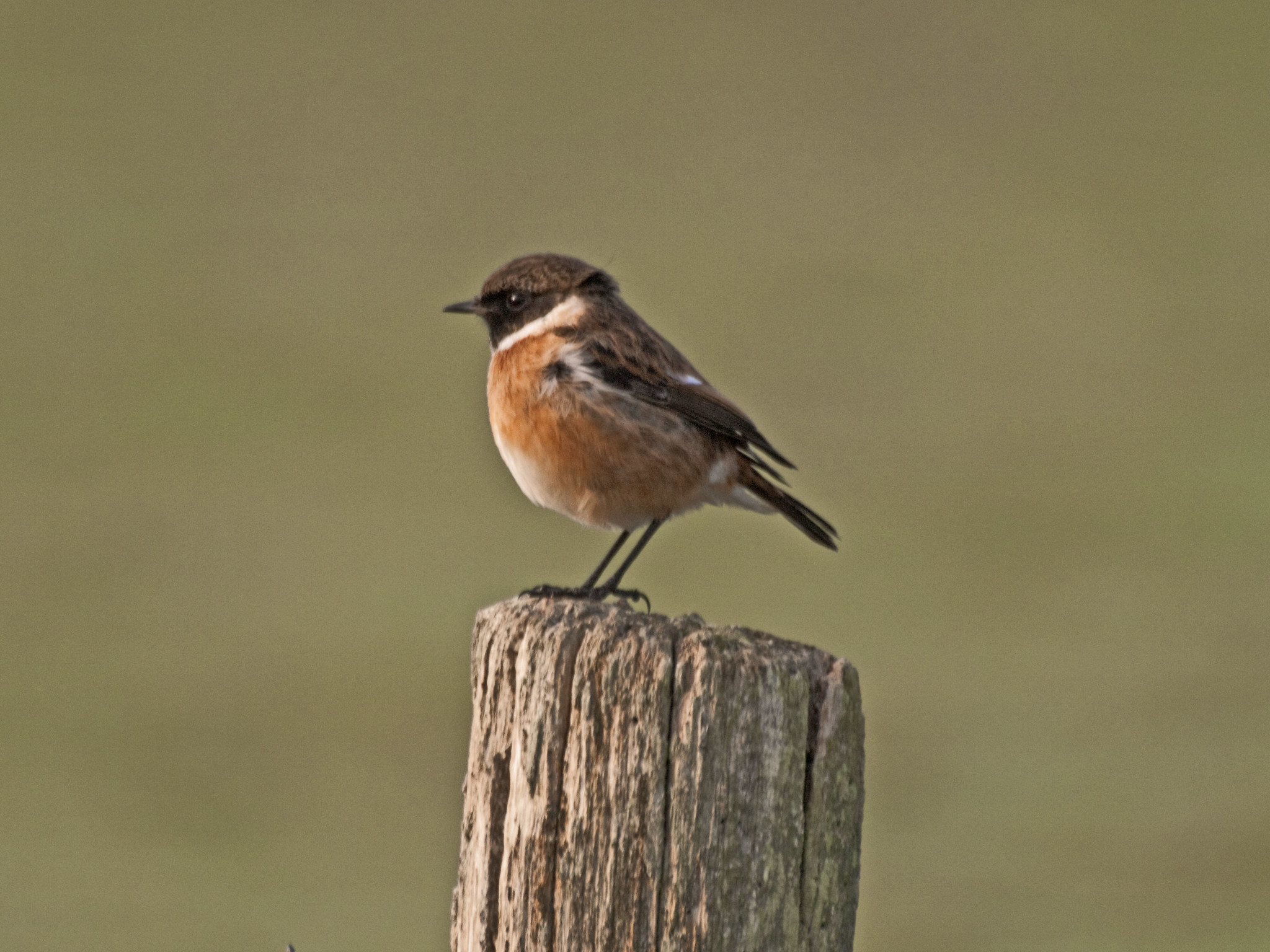
Common stonechat
Family Turdidae
Length: 12-13cm
Wingspan: 18-21cm
Weight:13-17g
Similar to the Winchat but with a white rump, a totally black tail and no white list on the head. Both species tend to use uncovered and elevated perches, being easy to locate. Abundant and widespread reproducer, where occupies open shrub and herbaceous environments, wastelands, clear forests and crops. It is more scarce in winter.
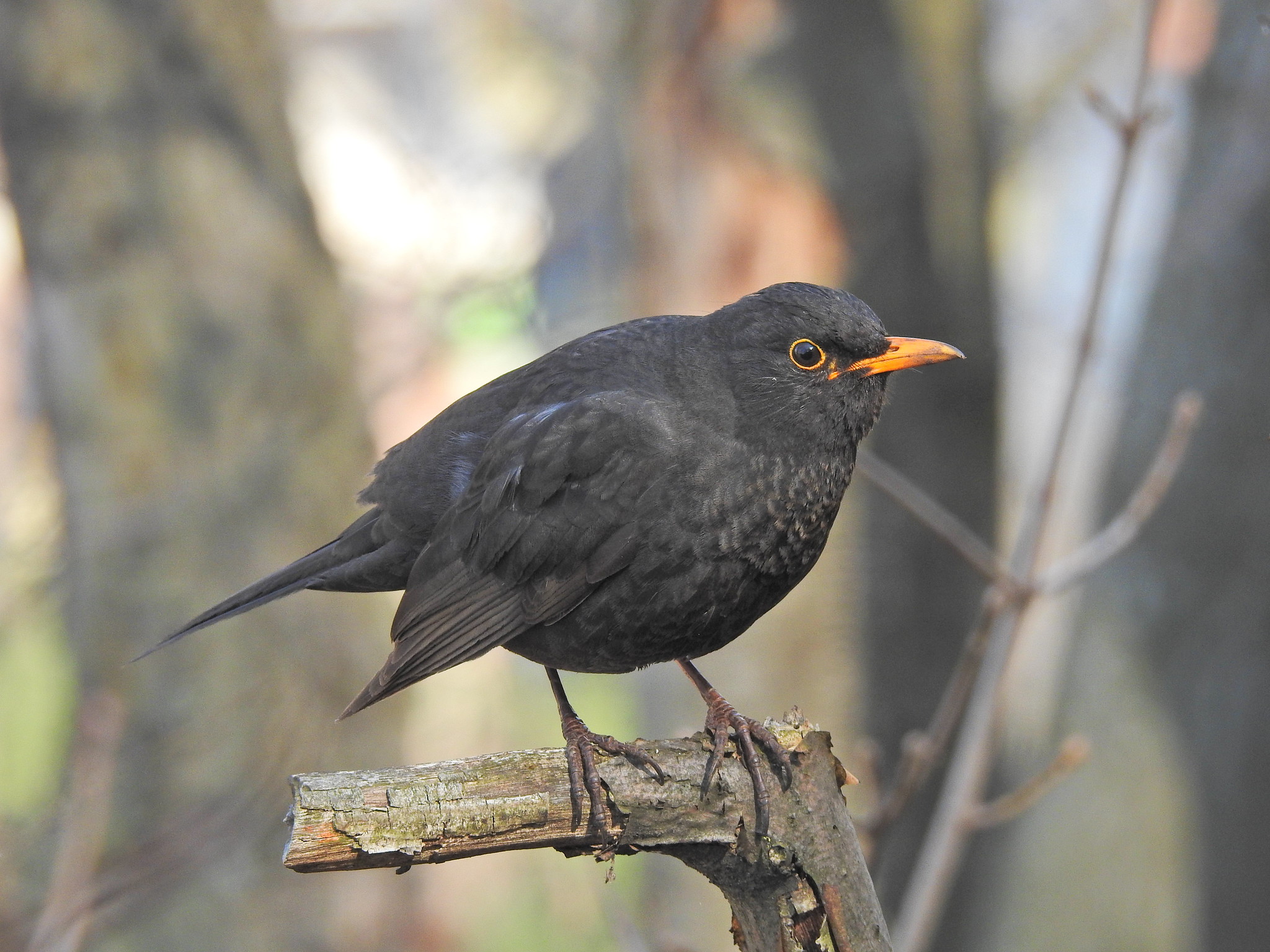
Common blackbird
Family Turdidae
Length: 24-25cm
Wingspan: 34-38cm
Weight: 80-125g
The long tail makes it easy to distinguish from the black starling, with which it is often seen in urban centres. Very abundant in the riverside woods and also in hedges, orchards, parks, wooded walks and gardens. Outside the breeding period visit more open places, such as crops, wastelands and bush areas.
Wintering of European birds.
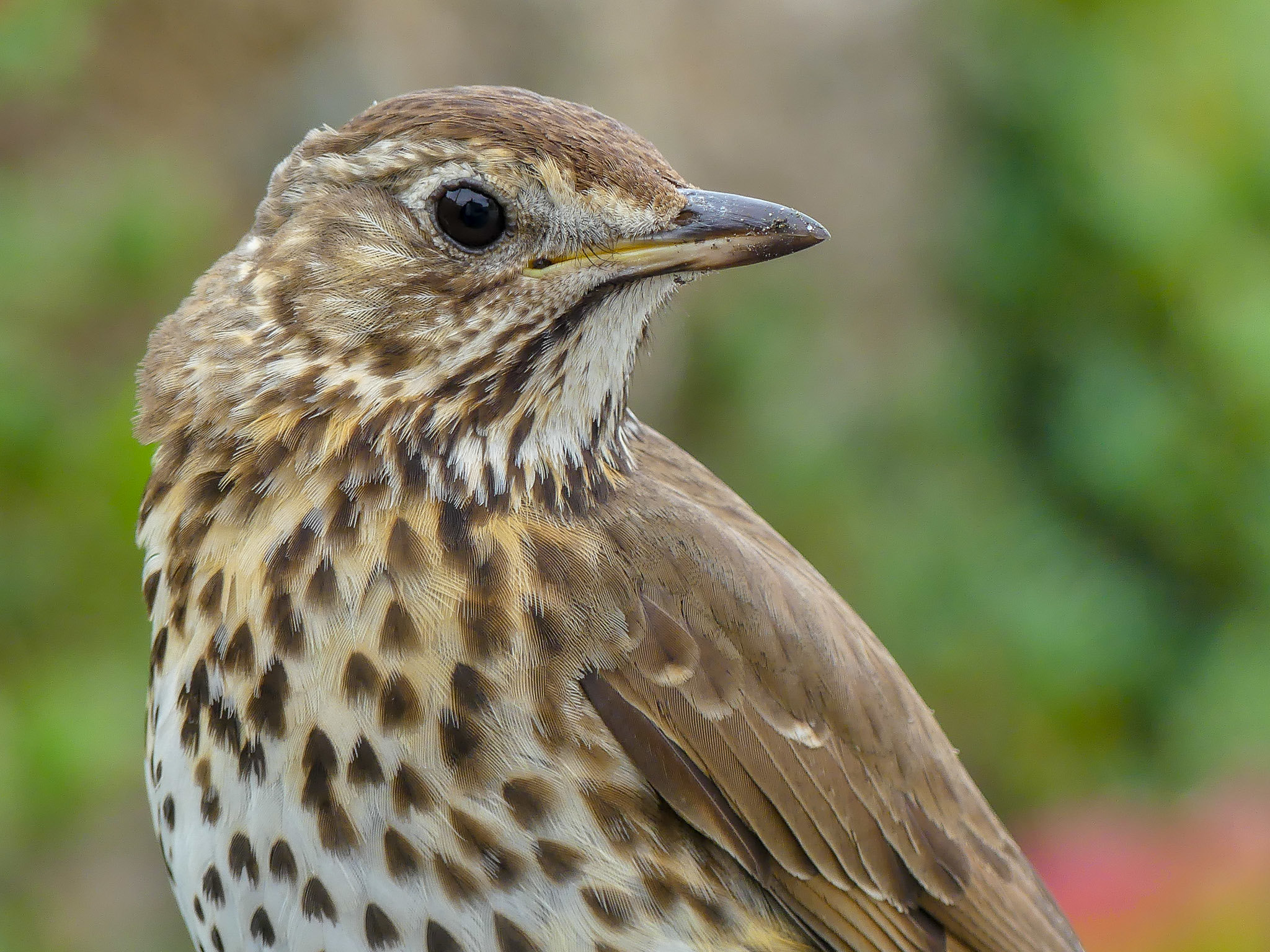
Song thrush
Family Turdidae
Length: 23cm
Wingspan: 33-36cm
Weight: 65-100g
Slightly larger than the Redwing, which has white stripes and orange flanks, and smaller than the Mistle Thrush, which has whitish cheeks and a mottled belly. It winters abundantly in the area.
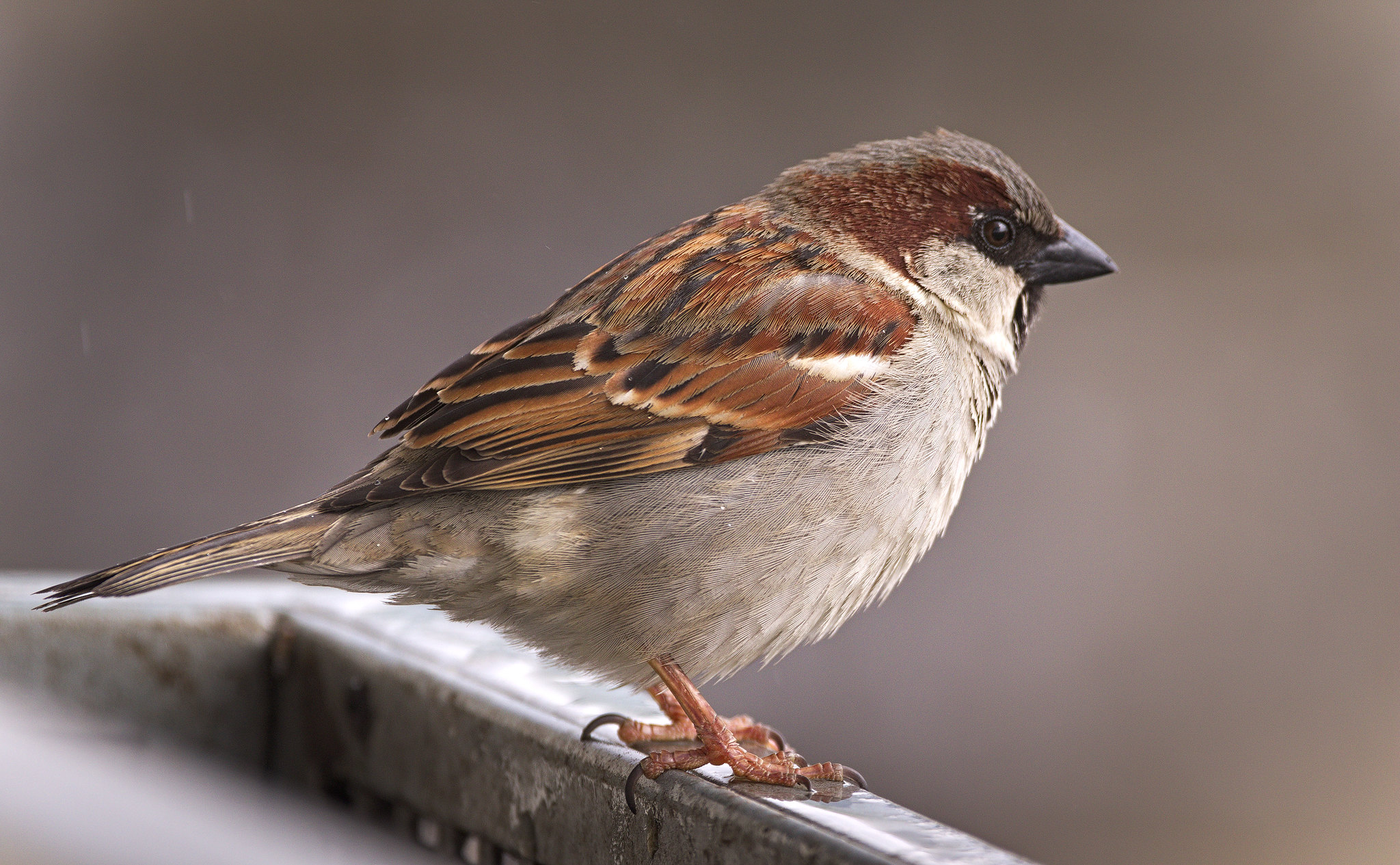
House sparrow
Family Passeridae
Length: 14-15cm
Wingspan: 21-25cm
Weight: 24-38g
The colour of the crown, chest and cheeks distinguish it from the tree sparrow. The urban bird par excellence, closely linked to man.
Very abundant in all the inhabited areas of the region. Although it also feeds in its surroundings. Outside the period
Breeder forms roosts in large trees and reeds
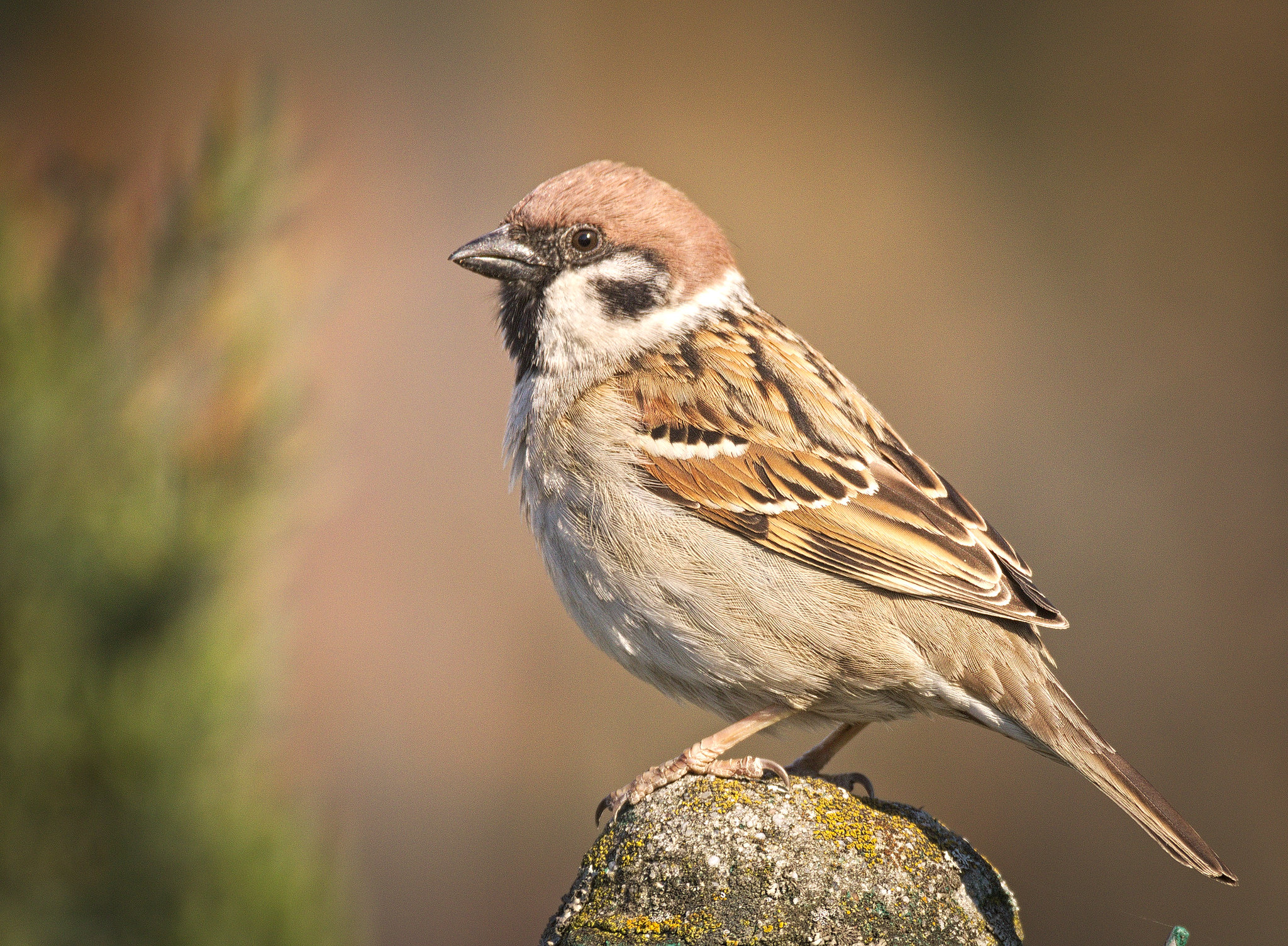
Tree sparrow
Family Passeridae
Length: 14cm
Wingspan: 20-22cm
Weight: 18-29g
Smaller than the House Sparrow, with a brown crown, grey breast and Black spot on the cheeks. Common nesting in small towns, it tends to avoid the modern hulls of large cities. It also inhabits thickets and clear forests, where it breeds in holes from old trees.
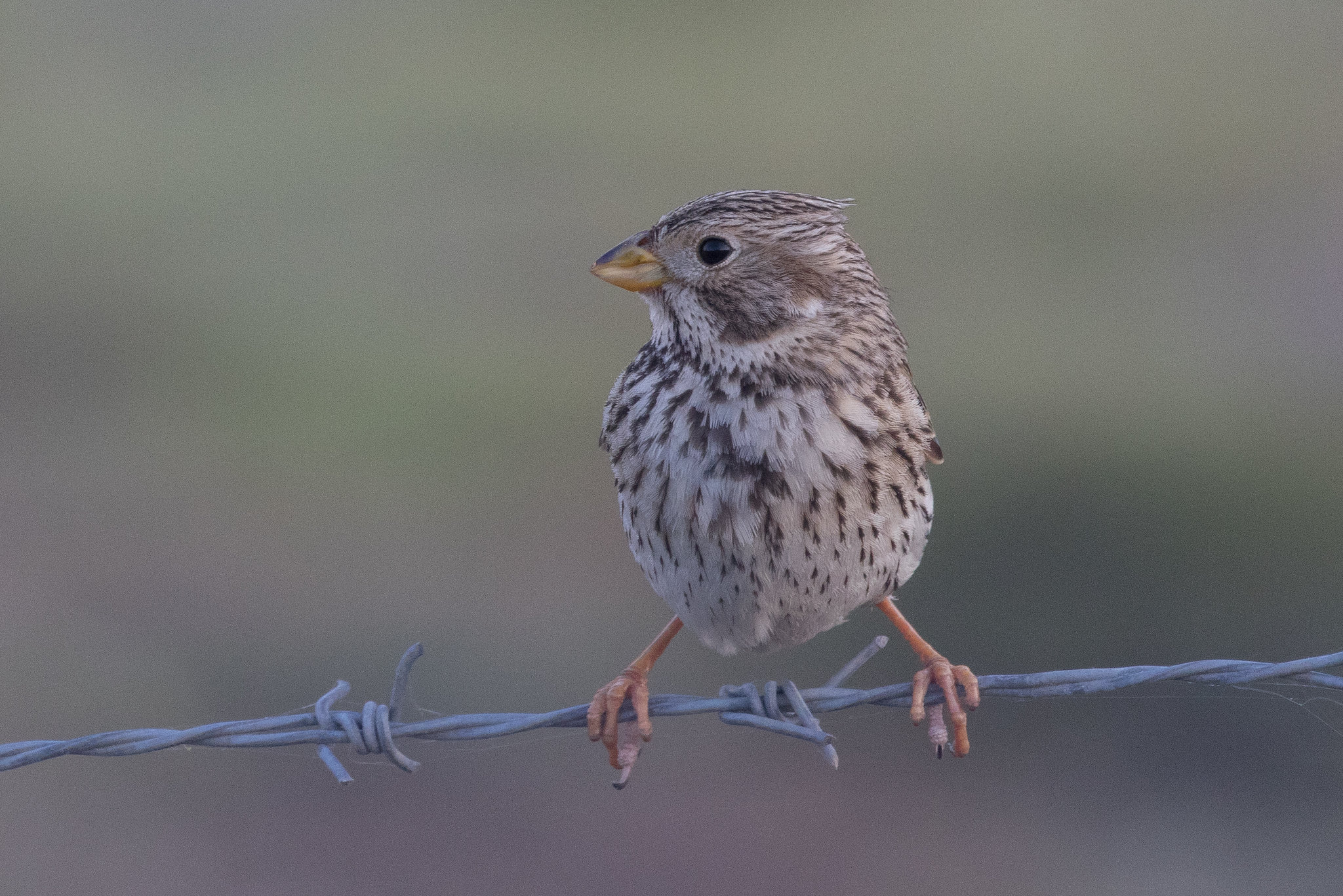
Corn bunting
Family Emberizidae
Length: 18cm
Wingspan: 26-32cm
Weight: 35-63g
The largest bunting, with a large beak and head and a barely distinctive plumage, mottled brownish grey. Very numerous and widely distributed in flat and cultivated areas of the steppe cerealist. Outside the breeding period it forms large flocks, often with other species, with important roosts in reeds of the wetlands. I sing something metallic, crushing and unmistakable.
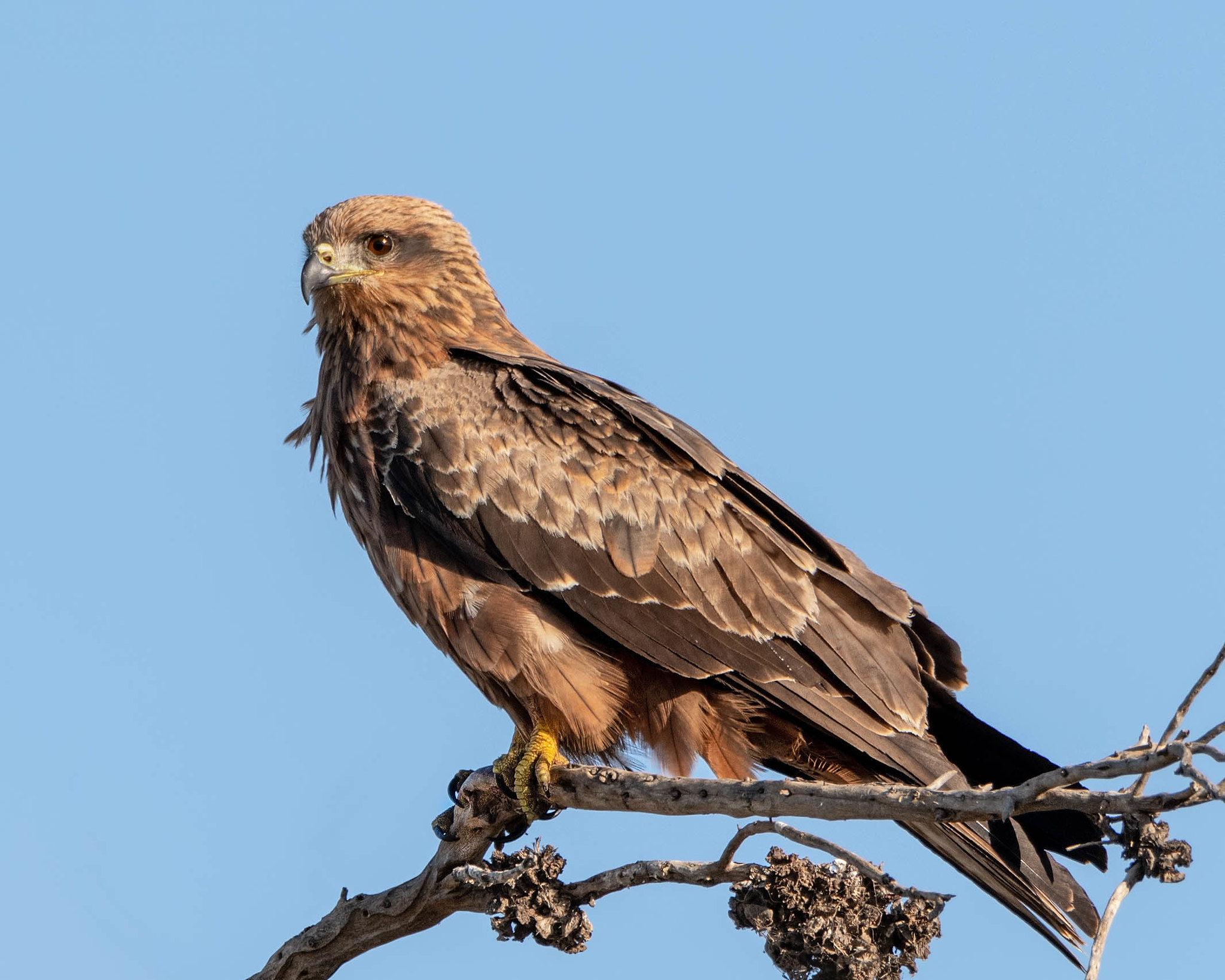
Black kite
Family : Accipitridae
Length:55-60 cm
Wingspan: 160-180cm
Weight: 630-940g
One of the most abundant birds of prey in Europe.
Medium sized bird of prey, which can be confused with others of similar size (booted eagle, common buzzard and marsh harrier, above all). Uniform, very dark brown plumage and a fairly long, slightly forked tail. The young have a mottled chest.
Scarce nesting in the area, being much more numerous in the postnuptial passage.
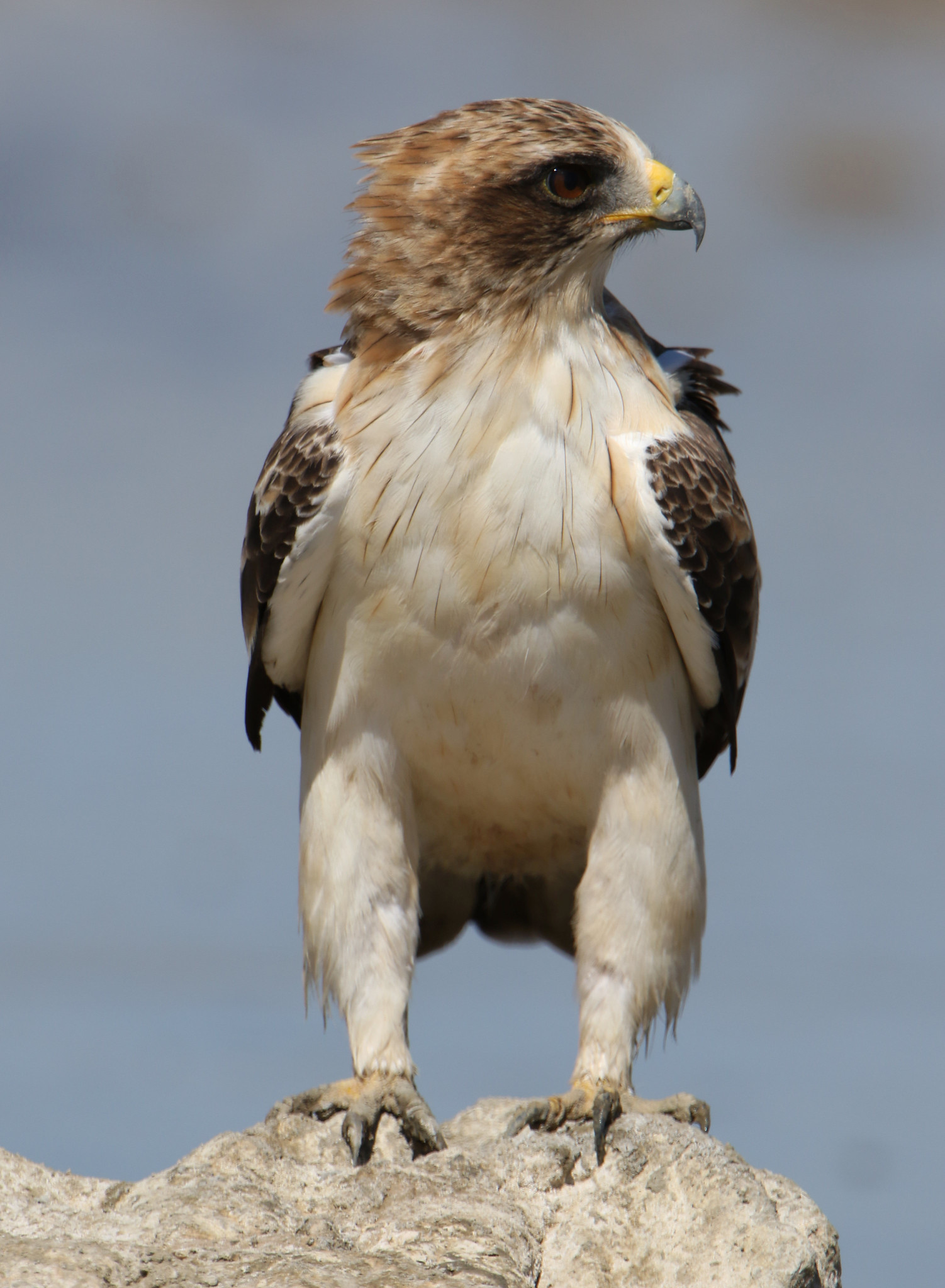
Booted eagle
Family Accipitridae
Length: 43-53 cm
Wingspan: 100-121cm
Weight: 0.5-1.2kg
Medium sized bird of prey with two colour phases, one clear (wings black and white) and a dark one (uniform dark plumage). This one The latter resembles the common buzzard, black kite and marsh harrier, but it has wider wings and small light spots on the back of the wings.

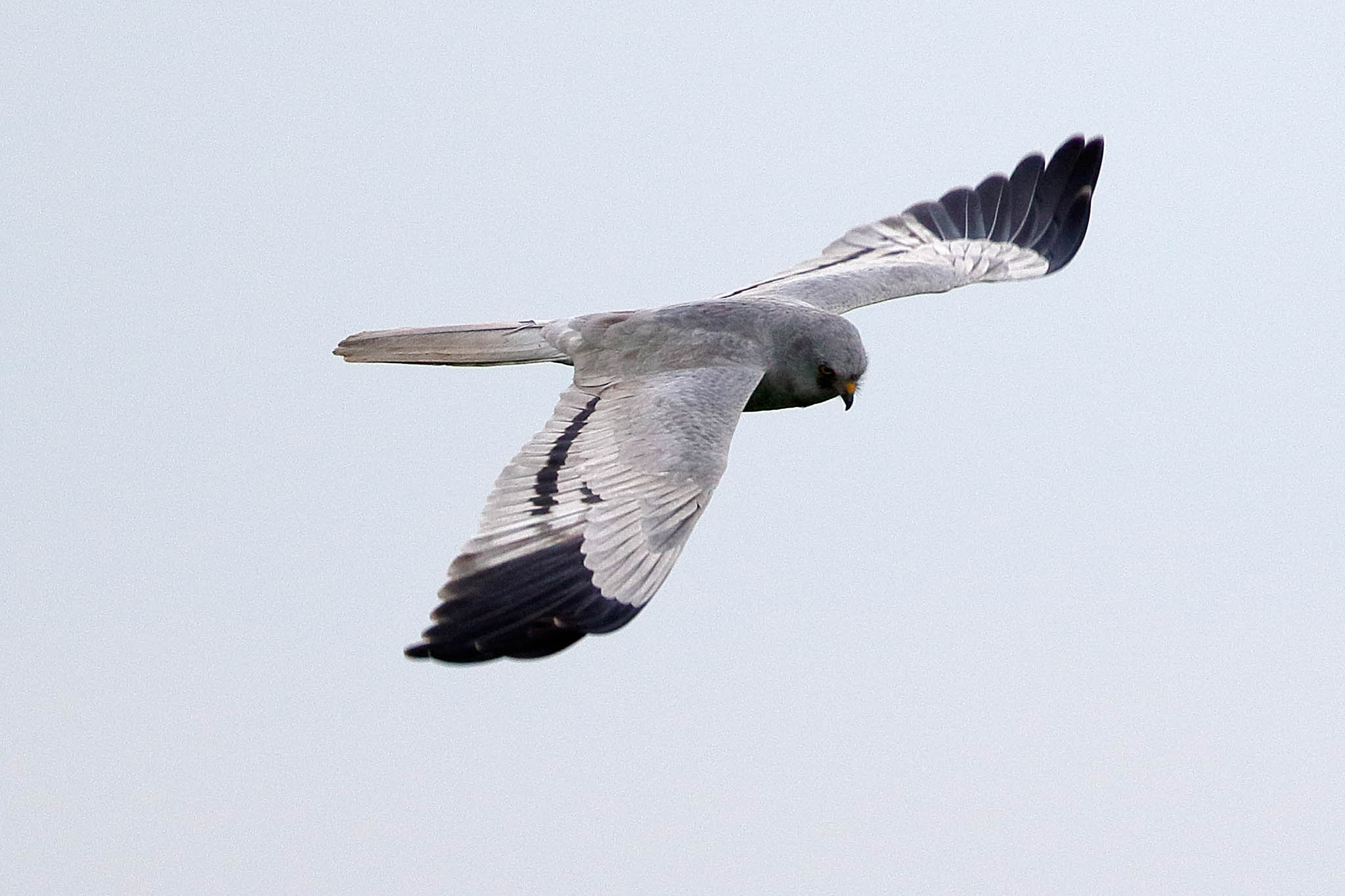
Montagu´s harrier
Family Accipitridae
Length: 43-47 cm
Wingspan: 105-120cm
Weight: 227-445g
Very similar to the Hen Harrier, with similar females. Somewhat smaller and more graceful in flight, with longer and narrower wings.
Presence in summer, with an important breeding population in the area's cereal crops, which is very suitable for the species. It eliminates large quantities of voles, mice, locusts and granivorous birds that are its usual prey.
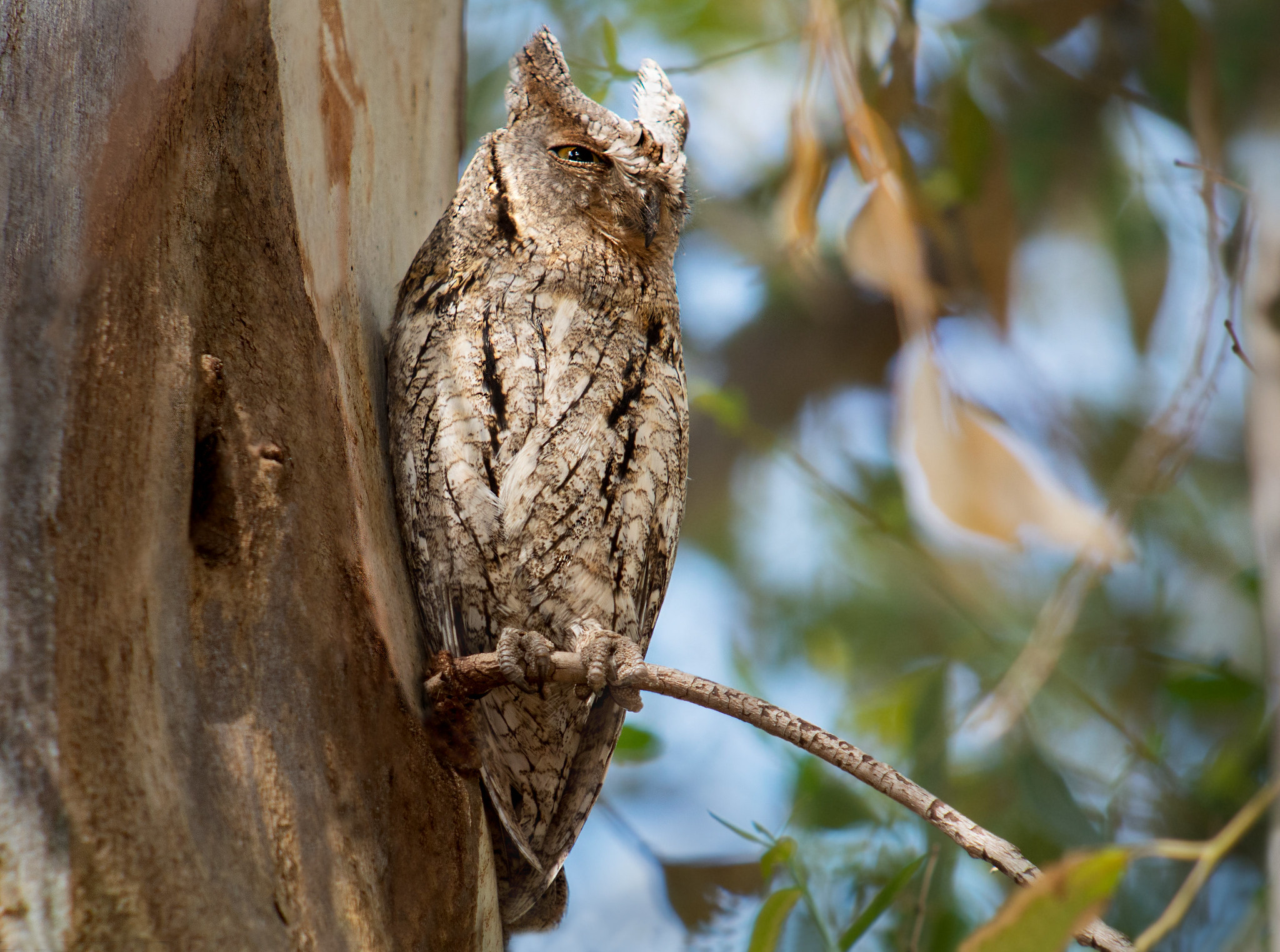
Eurasian scops owl
Family Strigidae
Length: 19-20cm
Wingspan: 53-63cm
Weight: 60-120g
The smallest nocturnal bird of prey in Spain. It is a discreet and reserved bird that goes unnoticed by its plumage which provides excellent camouflage. Very cryptic plumage, with two colour phases (greyish and reddish), to be confused during
day with the bark of branches and trunks. However, it is easy to detect due to its characteristic song, a fluting tuiu, repeated regularly at intervals of approximately 2 seconds.
It is present in summer, with widespread breeding, provided it has nesting holes.
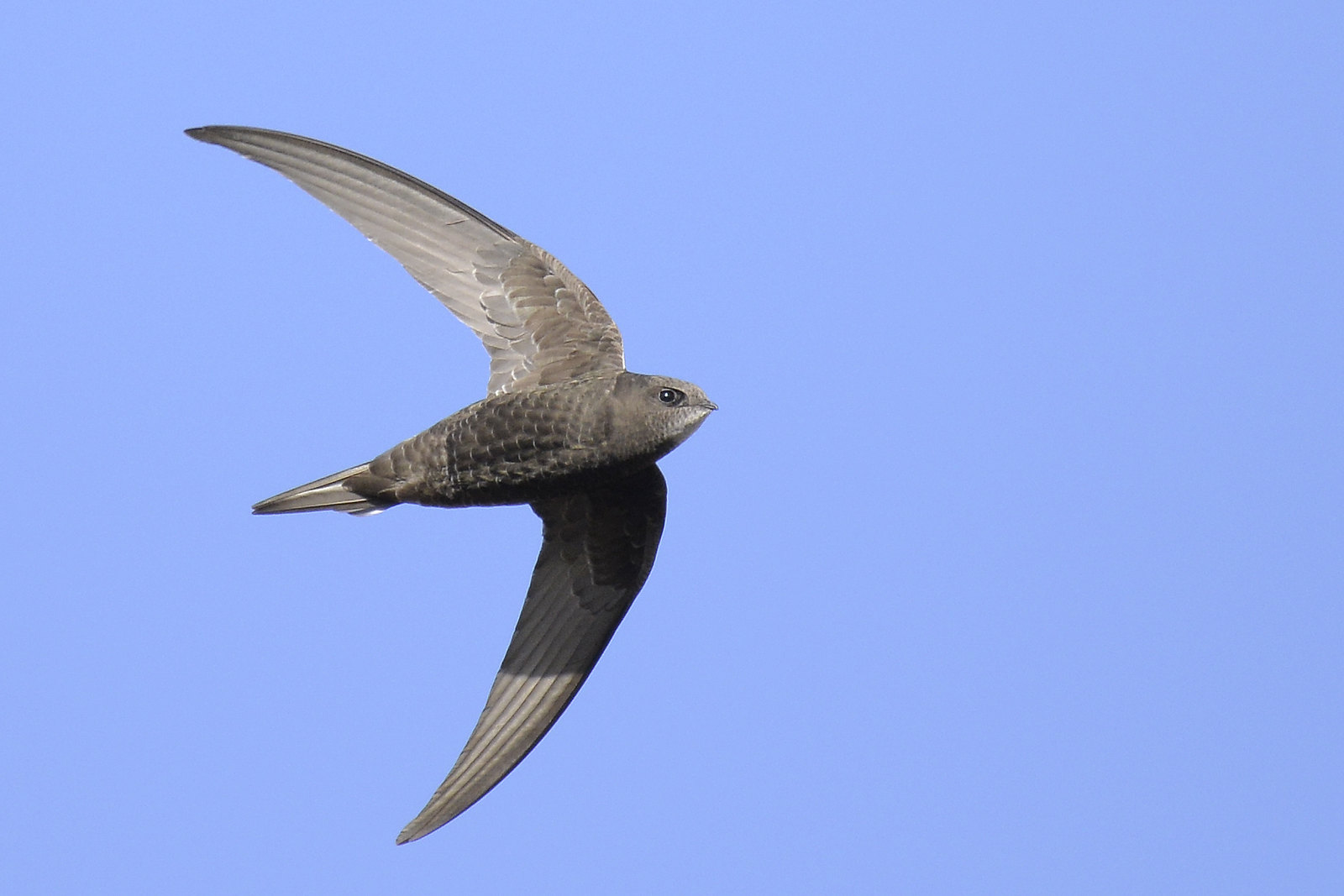
Common swift
Family Apodidae
Length: 16-17cm
Wingspan: 42-48cm
Weight: 31-56g
Very characteristic silhouette, with crescent-shaped curved wings. The strident cries of the flying groups are typical of summer afternoons in all the villages of the area. Important spring and autumn concentrations and summertime on lagoons and riverbeds river, at times with an abundance of airborne insects that they capture in flight.
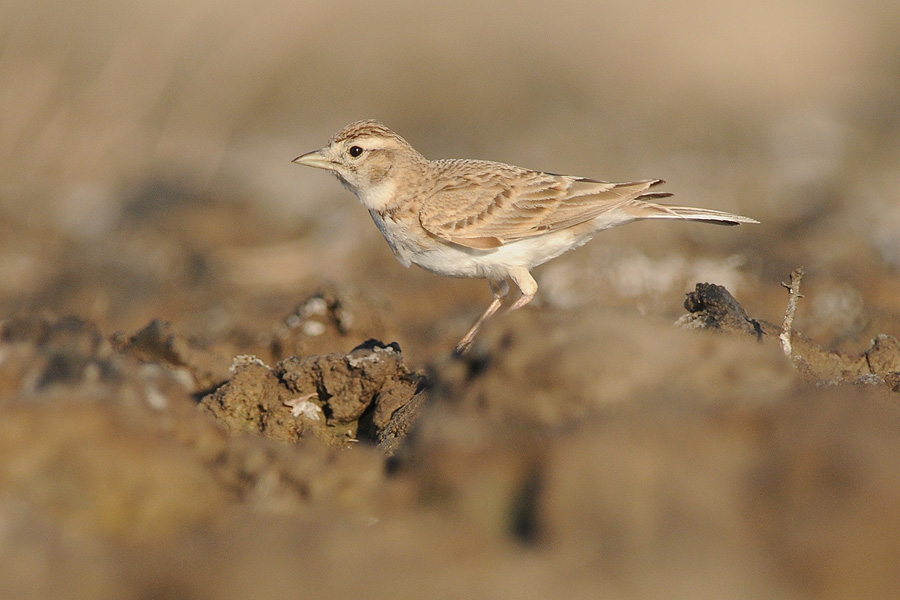
Greater short-toed lark
Family Alaudidae
Length: 13-14cm
Wingspan: 25-30cm
Weight: 20-26g
It can be distinguished from other larks by its small size and the absence of a ridge. Quite common and widespread in the steppes that are very suitable for the species. Prefers sandy and stony substrates with little vegetation. Winters in Africa.
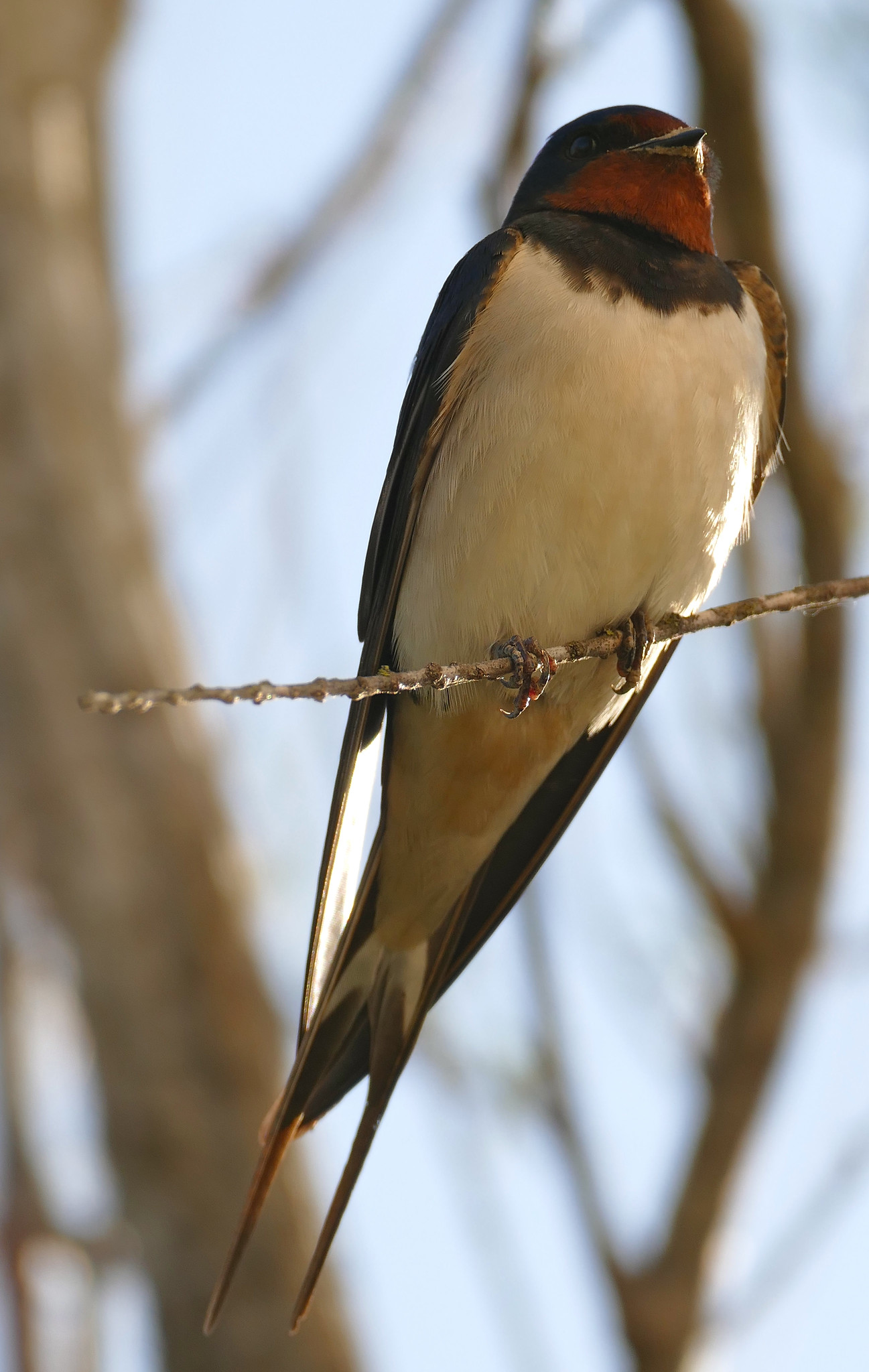
Common golondrina
Family Hirundinidae
Length: 17-19cm
Wingspan: 32-34cm
Weight: 16-22g
One of the most popular birds in all the villages of the region, where it is very abundant. In the wetlands of the area there are significant concentrations
in times of plenty of food, both in spring as well as after the reproductive period.
Also large roosts in reeds.
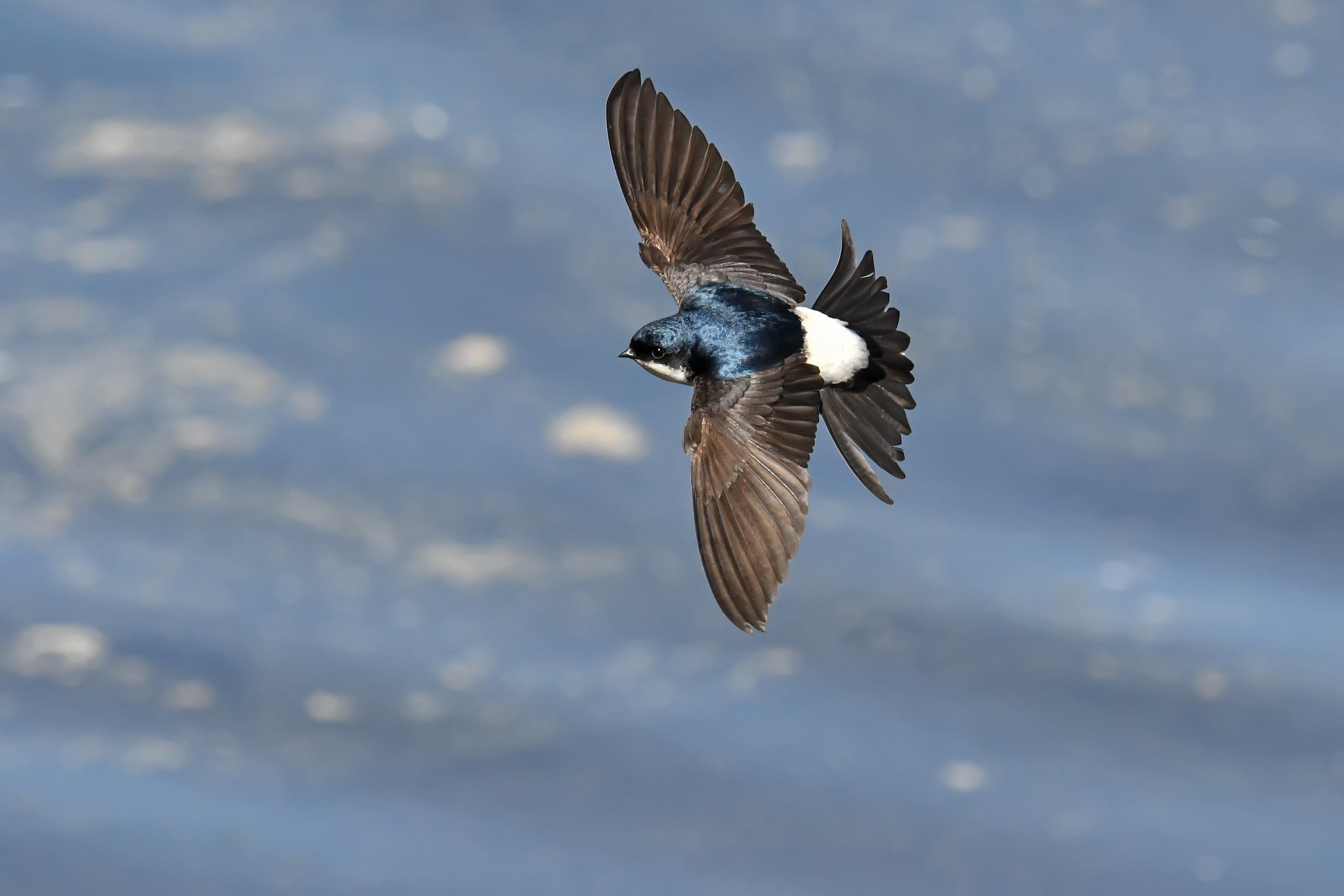
House martin
Family Hirundinidae
Length: 12-13cm
Wingspan: 26-29cm
Weight: 15-23g
Smaller than the swallow common, with shorter wings and tail and striking white rump. Usually flies at a higher altitude, avoiding low-flying on the ground. A common nesting site in urban centres, where it typically builds its mud nests in small colonies under the eaves.
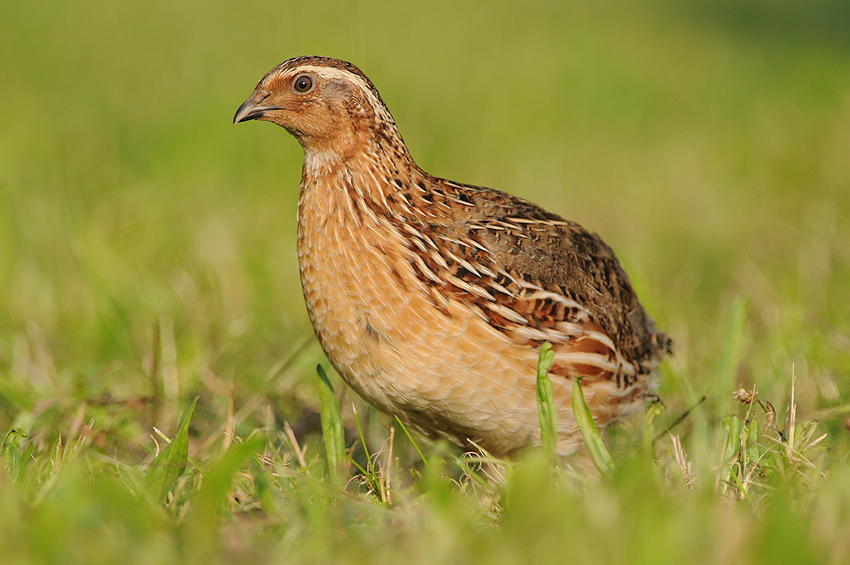
Common quail
Family Phasianidae
Length: 16-18 cm
Wingspan: 32-35cm
Weight: 75-135g
Small in size, with cryptic, mottled grey-brown plumage. Difficult to lift, tending to remain well hidden among the vegetation.
Fast, direct flight. Easily detected by its song in spring. Still numerous and widespread in the area.
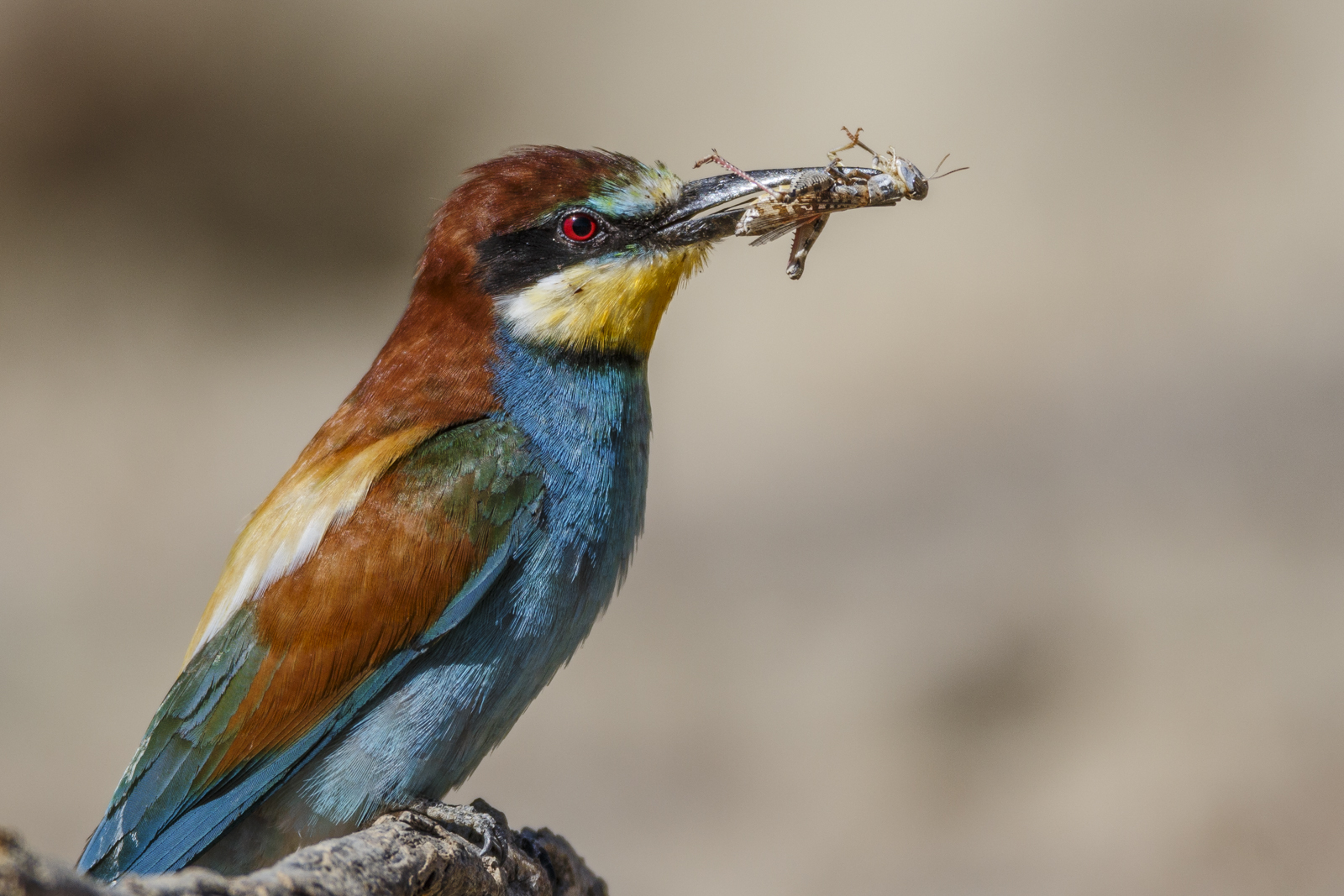
European bee-eater
Family Meropidae
Length: 27-29cm
Wingspan: 44-49cm
Weight: 44-78g
One of the most colourful and showy birds of the Spanish fauna. Specialist in bee consumption.
Presence in summer, being of a large player and extended. Greater abundance
during the migratory steps, when large groups can be observed hunting insects on crops and wetlands.
Its attraction is a very characteristic and unmistakable pi-pi-prruut, which emits incessantly.
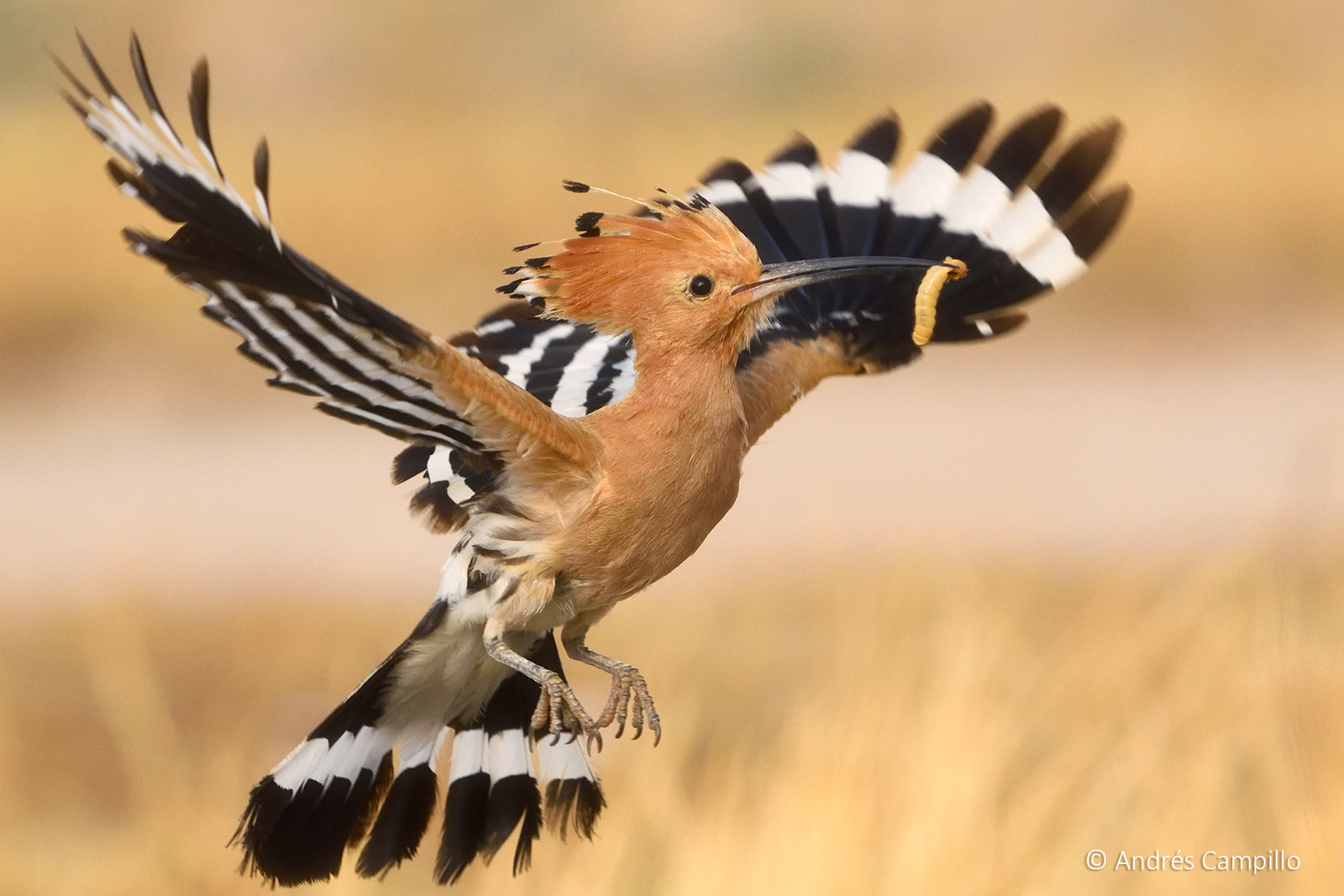
Hoopoe
Family: Upupidae
Length: 26-28cm
Wingspan: 42-46cm
Weight: 47-87g
Unmistakable, with its striking Feathers and crest of feathers. One of the most recognized birds in the villages of the region.
It is much rarer in the middle of winter.
Its song is a characteristic up-pu-pu-pu, grave and long-range, which has given rise to its Latin name (Upupa)
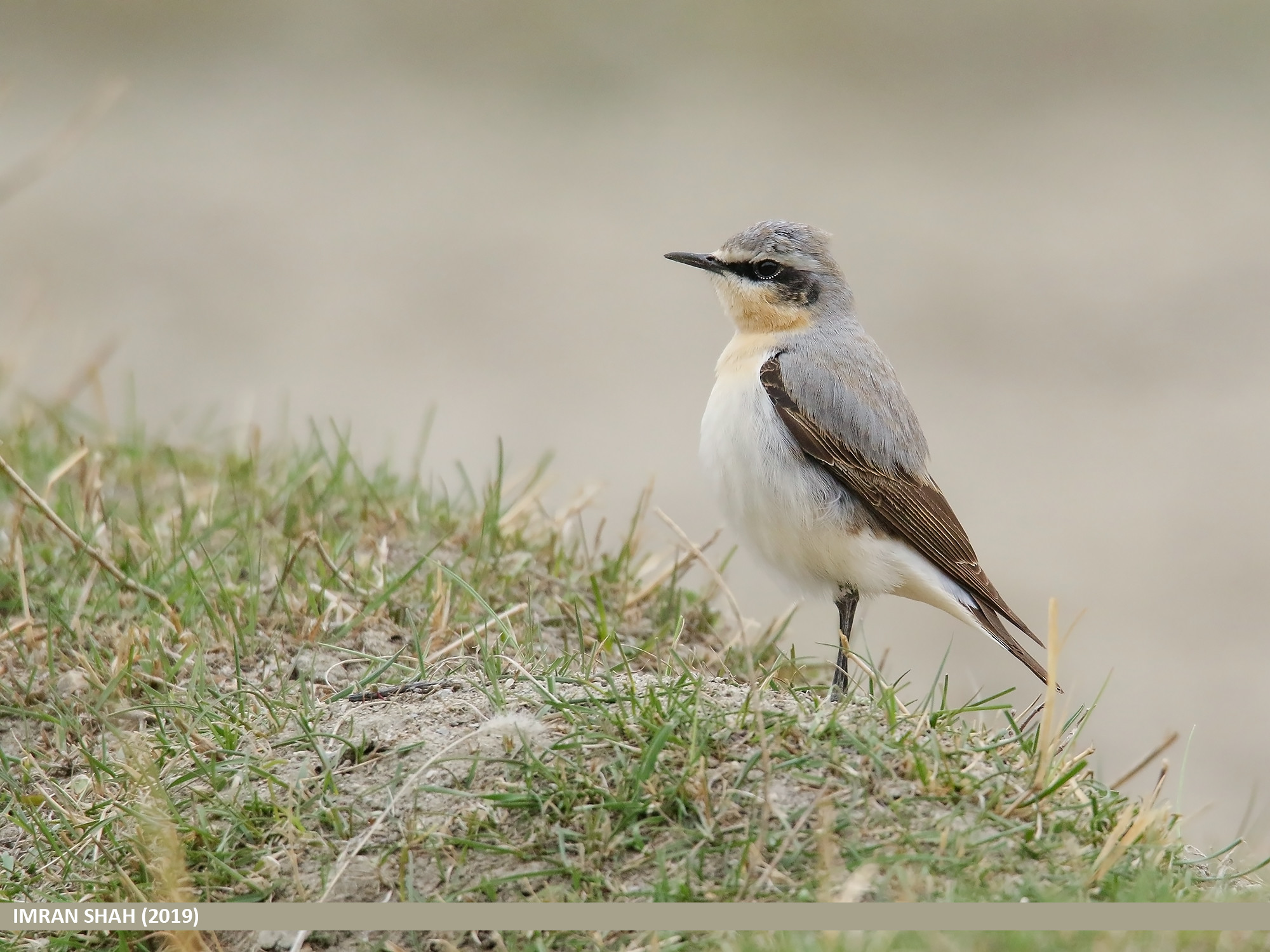
Northern wheatear
Family Turdidae
Length:14-15cm
Wingspan: 26-32cm
Weight: 18-29g
The blond wheatear, which is very rare in the area, has yellowish-brown rather than grey upper parts. Presence in summer, with abundant and well-distributed breeding population. It nests in human buildings and constructions, including the cairns. Important postnuptial migratory passage, when the species is very numerous in all the steppe crops of the region.
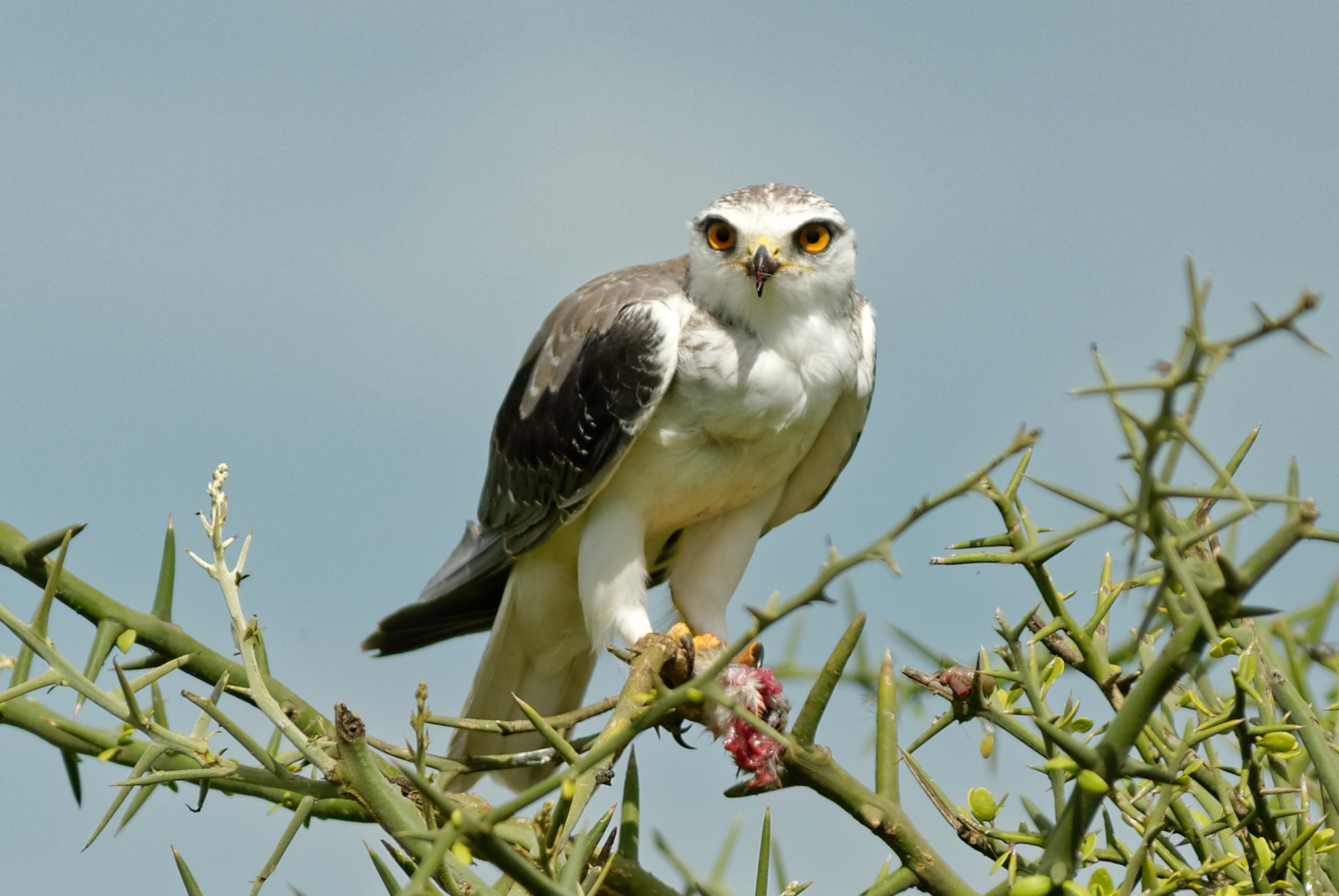
Black-shouldered kite
Family Accipitridae
Length: 31-35 cm
Wingspan: 75-87cm
Weight: 230-235g
A small bird of prey with pale tones and very striking coral red eyes. With marked twilight activity. It hovers for locate their prey, especially in cultivated areas. Nesting
very low and irregular in the area, dependent on explosions mice and voles, which are the basis of their diet.
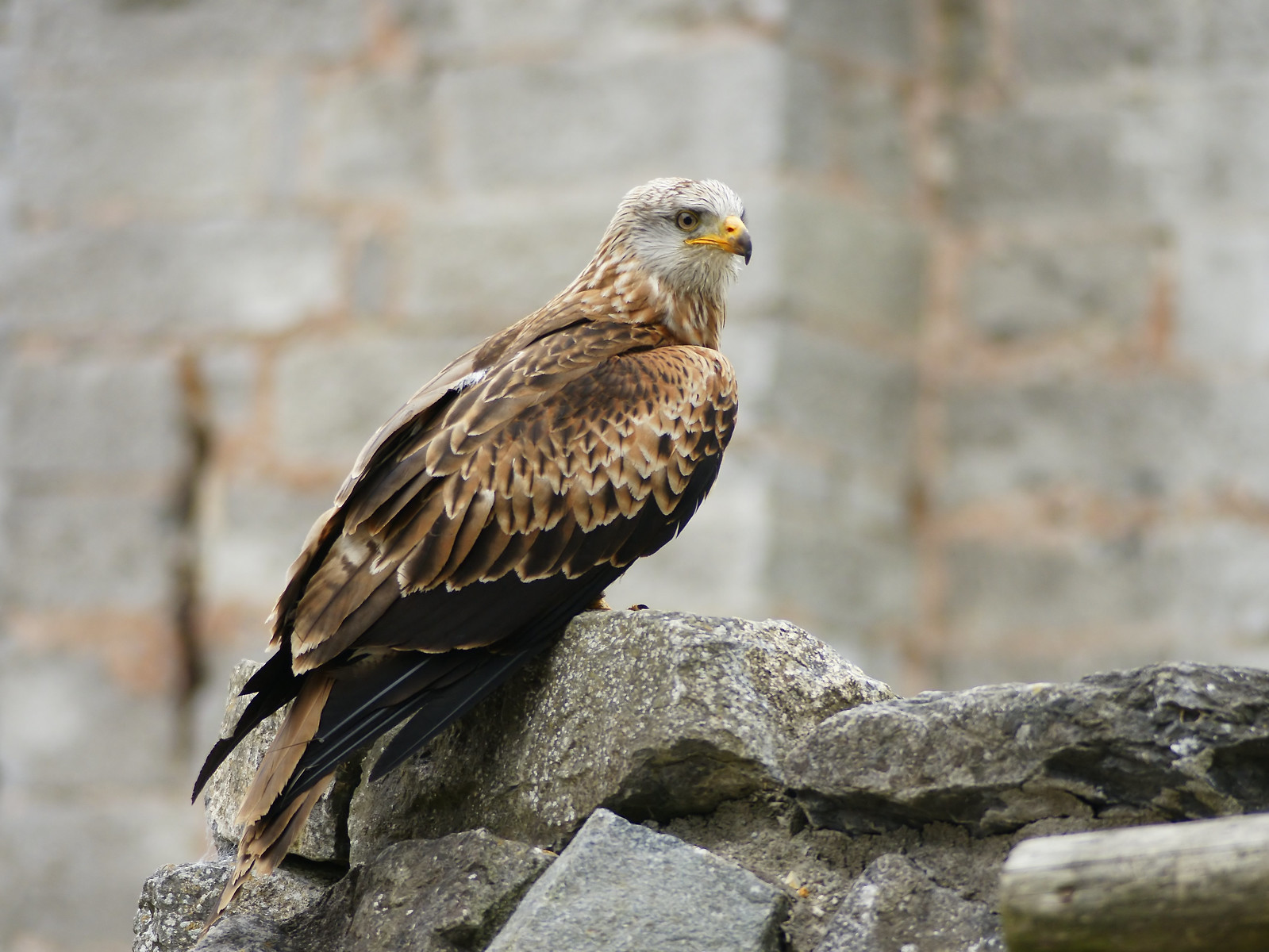
Red kite
Family Accipitridae
Length: 60-66 cm
Wingspan: 175-195cm
Weight: 0.8-1.3 kg
Larger than the Black Kite, from which it can easily be distinguished in flight by its long, deeply forked red tail and by the striking white wing spots.
Very little nesting in the region, in regression.

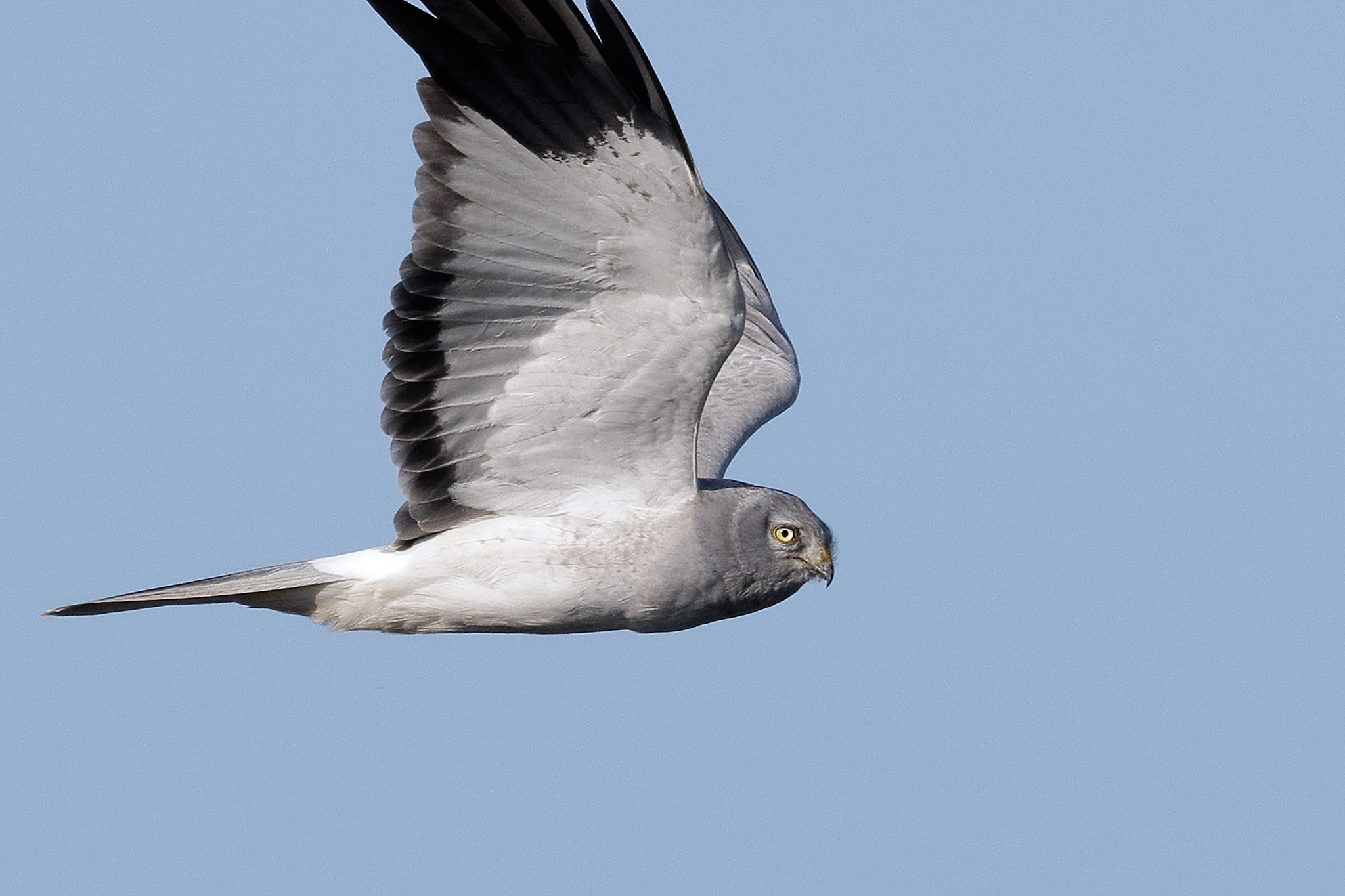
Hen harrier
Family Accipitridae
Length: 44-52 cm
Wingspan: 100-120cm
Weight: 300-600g
Quite similar to the Montagu's Harrier, with slightly larger size and wings wider. Very similar females. The male is very light grey in colour and has no black stripes on the upper part of his wings, which are white underneath. Small breeding population, being more frequent in passage and wintering. Important winter roosts in the lagoons.
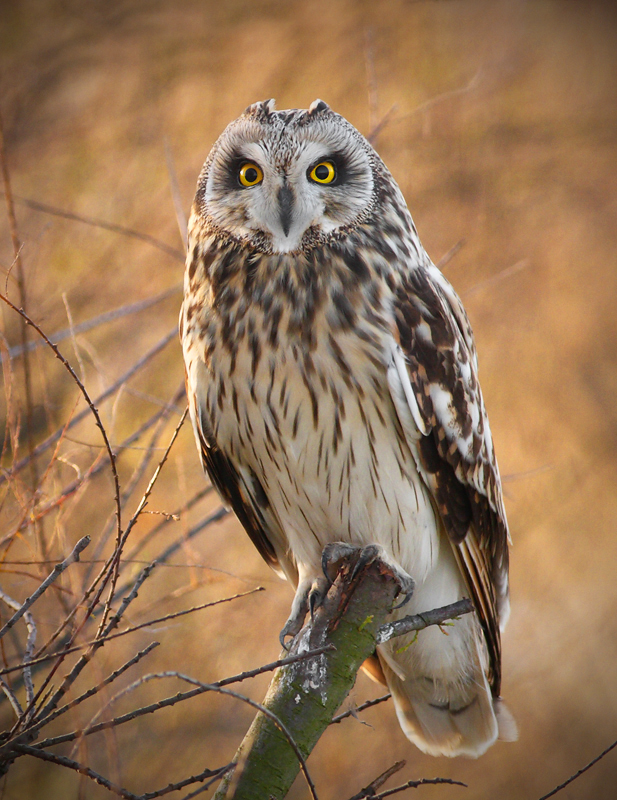
Short-eared owl
Family Strigidae
Length: 37-39cm
Wingspan: 95-110cm
Weight: 260-420g
Night birds of prey with earthly habits. It can be distinguished from the Long-eared Owl by its yellow eyes, black mask and smaller tufts. Important nesting and wintering area, although with irregular presence. Its numbers are closely dependent on the demographic explosion of mice and voles, and some of them are relatively common.
years and very few or absent in others.
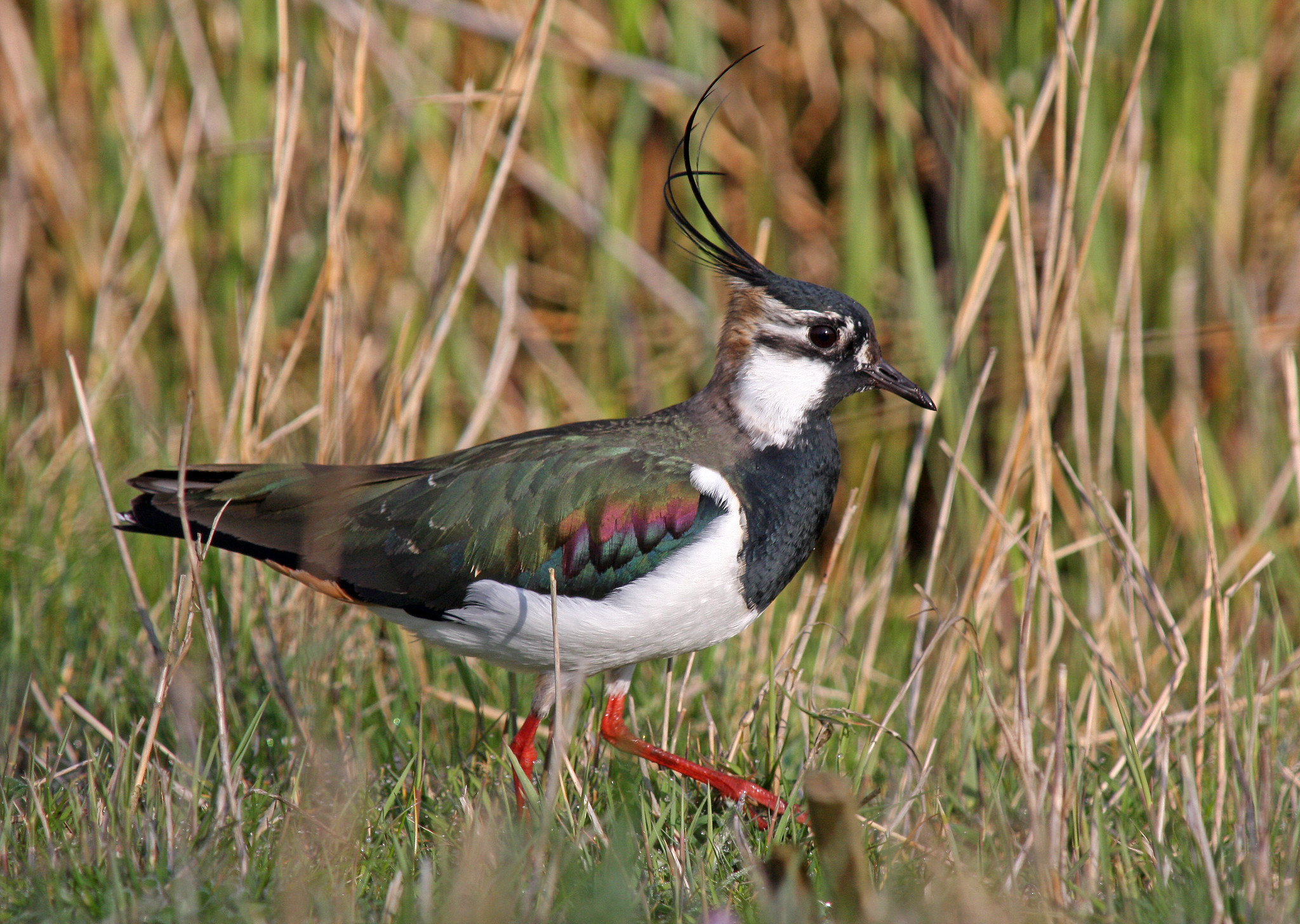
Northern lapwing
Family Charadriidae
Length: 28-31cm
Wingspan: 82-87cm
Weight: 140-320g
Unmistakable with its characteristic long headband. Wings Quite wide, white underneath with black tips. At winter forms numerous sides. Important breeding population, one of the largest in the country. More numerous in winter and at migratory crossings, sometimes with thousands of birds, depending on the weather conditions.